 The 266 ATC Squadron at RCAF Leeming Bar, North Yorkshire, 1943. Leeming Bar opened in 1940 as a bomber station during the Second World War.
Photograph courtesy of Bob Harbron.
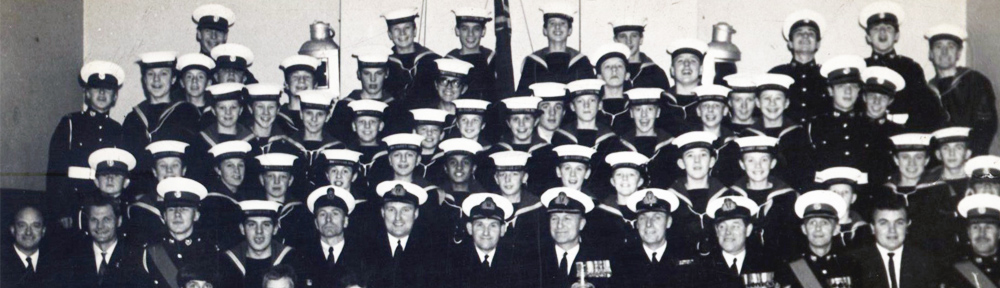
The 266 ATC Squadron at RCAF Leeming Bar, North Yorkshire, 1943. Leeming Bar opened in 1940 as a bomber station during the Second World War.
Photograph courtesy of Bob Harbron.
Couple of points would indicate this picture was taken post-war. One, no machine gun (nose cone) on the aircraft. Two, its serial number painted in large digits under the wing. Good photo, interesting thread.
I, together with my friend Mike Wood, both ex 987 Stockton Grammar School Squadron members are numbers two and three from the left on the back row of the photograph. Unfortunately I am unable to recall which airfield it was but the date was certainly no earlier than 1946. The only 266 Squadron ATC officer I can remember was Pilot Officer Dan. He was memorable for having to use a motor cycle to deliver a parachute to an Avro Anson waiting at the end of the Thornaby runway with its engines running. I on being told to stow my parachute under the seat had grabbed it by the metal handle. I was shocked by the amount of parachute silk that spilled out and doubly shocked by the language of the pilot when I informed him of the situation.
Leeming does not have that kind of C type hangar, could it be Linton or Dishforth?
Craig, Leeming Air-force base was practically torn apart around thirty years ago and rebuilt with the bee-hive hangers maintenance and storage ready for the front line Squadrons to move in, my Son living in the village got triple glazing fitted free because the runway was almost straight down the back of the village.
Sixty odd years ago it was a Bomber base and would have large hangers as did Dalton Linton Catterick Goosepool and Dishforth. Those hangers were a flat pack made by Dorman Long to a pattern transported and erected in record time for the four engined bombers of that time.
How do I know? My uncle Raymond Tighe was a young Draughtsman at the time who drew up the plans and later wrote a book about the Steel works Tees-side Bridge and Dorman Longs of which he later became a Board member.
This whole area apart from Thornaby was made up of Bomber groups mainly Canadian though there were other Squadrons among them, I would presume they had the hangers for those planes.
I think you may be talking about the Hardened Aircraft Shelters as Leeming still has it’s five wartime C Types (1938 pattern), the C Types in this picture are the 1934 pattern built during the expansion period. Linton, Thornaby, Catterick and Dishforth all had the 34 pattern Type C. Dalton was a wartime built airfield and had T2 type hangars which were built by Teesside Bridge & Engineering Co, they may also have been built by Dorman Long? Dorman Long certainly built prefab Extra Over Blisters which many airfields had, Thornaby had quite a few round it’s dispersals.
Correct Craig, my Uncle Raymond Tighe worked for Teesside Bridge and Engineering until it all became British Steel, we still called it Dormans. His book was about the Teesside Bridge wartime work and collaborations to build everything from the “T” hangers, Multi purpose Barges and many other wartime needs though the upheaval and his time on the Board of what we called Dorman Long. It is of interest to note very little or no profit was made by any of those companies.
The main and satellite Aerodromes were constantly being extended almost up to the end of the war as one of my Dads jobs was leading material to all of them as the dispersal area’s were extended, runways repaired and building work done.
I smack my hand for being lax with my description, History has to be correct or it just becomes hearsay.
Did you and your Dad ever deliver to Elvington, Frank? The reason I ask is a couple of years ago the Control Tower there had a blackboard inside one of the rooms upstairs with the name of a Stockton-on-Tees firm written on it. I think it said they were either building the runways or delivering the materials to lay them. I have a photo of it somewhere, i’ll send it in if i can find it.
Craig, if Dad did go to Elvington I was not with him and although he had two “A” licenses allowing him to deliver anywhere in the country that would have been an all day job at the time. Narrow roads over the Howardian Hills Pickering Malton road, a 24 mph speed limit plus a Max of 5 cubic yards (5 ton) it would not have been worth it.
Robinsons had the biggest trucks and they also delivered from TARMAC to those Aerodromes.
The trucks of the time were low on power which was why he bought the Opel, larger capacity larger engine, he always tested them on Wynyard bank, the Bedford crawled up, the Austin did much better although the Opel took it in its stride.
I got to ride with him school holidays when not needed on the farm or directed to potato picking by Richard Hind, a once a year job with no get out and most certainly an eye opener as we mixed with local villagers many of them women who had a rather rural sense of humour at times.
The Haulage Contractors with their own vehicles did share out the work during the war, Bob Durham worked for Dad in the early days, I often think what may have been if I had been more interested in Transport than Engineering and the Army, saying that the full and at times far too exciting a life would have not happened.
I was intrigued by this photo, so did a bit of research. It is a Halifax fitted with Bristol Hercules engines as correctly described, however it is a RCAF Halifax B.V11 and the only serial ending N241 is PN241 which was built by Fairly and entered service in Feb/Mar 1945 and was with 432 Squadron at East Moor, near York, until struck off June 1945 when the squadron was disbanded. Maybe the aircraft was visiting Leeming but it must have been in 1945. Perhaps Bob Harbron could clarify a bit more, as I assume he is in the picture.
A slight correction in that after operations with 432 Squadron , PN241 went on to fly with both 1665 Heavy Conversion Unit and 1332 Heavy Transport Conversion Unit at RAF Linton On Ouse near York before being sold as scrap in August 1947 .
I concur with Graeme that 1945 is a more probable year for the photograph being taken and most likely while 266 were on their annual summer camp ?
Graeme, Bob’s knowledge of Norton and surrounding area is written down in books and pamphlets with Norton Heritage Group.
So many memories have gone from a time we did not all write it down which is why my name crops up often on Picture Stockton, I would ask people to get the memories of their older relatives before it is too late.
The top of the engine air intakes are the Bristol Hercules and some Mark 2 Lancaster’s had them although the main engine was the RR Merlin or the American Allison, the cockpit shape is also slightly different to the later Lancaster which was classed by many to be even better than the Halifax.
The same Bristol engine was used on the Short Stirling which was in service throughout the war but the cockpit of a Stirling looked as if it had been stuck on top of the fuselage as an after thought.
I have memories of Dad delivering materials to Leeming Bar although it was actually Londonderry a truck stop on the Great North Road as it was known at the time.
It was long distance and I loved the run (school holidays of course), country roads steep banks convoys of army trucks from Catterick training drivers, we wandered through villages complete with ponds and village greens and it would take something like two or more hours to do a run that now takes me thirty minutes to my Son’s house in Leeming Village, it was 24 mph limit on the truck and with those rod and cable brakes it took 30 minutes to stop. We also did the run to Leeming Bar to the VOM pie factory with steam coal for the boilers always got a hot pie, the girls would stick a thumb in the crust so they were rejects, with warm gravy running down my face I did not give a hoot rejects or not.
I sometimes do the run we did then, no major roads in the 1940’s, nothing much has changed and taking my time adds another fifteen minutes still well over an hour faster than back then.
Does anyone know what the aircraft is? I t looks like a Lancaster but I’m not sure.
It is a Handley Page Halifax, a V I think. RCAF427 Squadron flew these from RAF Leeming.
987 Flight ATC (Stockton Grammar School) was at Leeming in 1944. In addition to being shown various maintenance skills & being told about the current bombing flights to Northern France and elsewhere we were taken on flights in Airspeed Oxfords. For us exciting with Canadian pilots ‘resting’ from bombing raids. We navigated up to Teesside with a few minutes on controls!
Spot on Ken the later model Halifax had Bristol Hercules engines and the smooth nose cone, they took the turret out. Many Halifax Mks were modified for differing roles.