

The Haverton Hill and Port Clarence War Memorial was unveiled on the 14th October, 1922 by Sir Hugh and Lady Bell.
Photographs and details courtesy of Martin Dunnill.
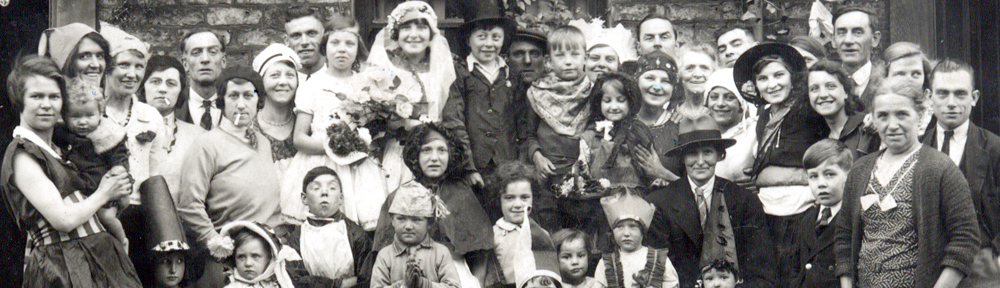
The Haverton Hill and Port Clarence War Memorial was unveiled on the 14th October, 1922 by Sir Hugh and Lady Bell.
Photographs and details courtesy of Martin Dunnill.
Lance Corporal Arthur Appleton Waller served with the Durham light Infantry (18th battalion). He died 3 March 1917. His name is on this memorial and he is buried in Varennes Military Cemetery, France.
The cemetery lies between Albert & Amiens. It was used by the 4th, 11th & 47th Casualty Clearing Stations between October 1916 and May 1917. This would imply that he either died of wounds or disease.
Arthur was 28 and was born in Haverton Hill, Prior to the war he had worked at the salt works in Haverton Hill. He was one of ten children born to John & Sarah Waller who lived at 23 Clarence Street, Haverton Hill.
The men named on this memorial served in a wide range of the Great War campaigns. Braithwaite Reginald Swinburne died during the campaign in Mesopotamia. He was killed in an accidental explosion whilst serving as an acting sergeant with the Royal Engineers (Inland Water Transport) on 2 March 1917. He is also commemorated on the Basra Memorial.
Prior to enlisting Braithwaite Swinburne lived at 59 New cottages, Port Clarence, with his wife, Catherine Ann and their children. On the 1911 census his profession was given as master of motor launch at a iron works. Probably Bell Brothers Clarence Iron Works.
By March 1917 he was part of the British 3rd Corps who were advancing on Baghdad. On the evening of March 2nd 1917 Sergeant Swinburne, aboard a motor lighter, was at the 13th Divisions dump at Bagailah. Inexplicably he removed a detonator from a Turkish aeroplane bomb, which had been deposited at the dump, and attempted to dismantle it, The detonator exploded and Sergeant Swinburne was killed instantly. He was buried at Bagailah.
The tragedy left Catherine Ann a widow and their five children without a father. His grave must have been lost subsequently as the Basra Memorial is for the missing of the campaign.
There was a lull in the fighting on the Somme as winter set in, but men would continue to die. Lance Corporal Richard Dudley served with the Royal Engineers (95th Field company). He was killed 22nd December 1916 on the Somme. He is buried in Mailly Wood Cemetery, Mailly-Maillet, which is 9 Kilometers north of Albert.
He was a native of Port Clarence and his parents lived at 6 Victoria Avenue, Stockton-On-Tees.
very sad
Richard Dudley was born in Port Clarence in 1887. He was one of eight children born to George & Annie J Dudley. His parents were originally from Cheshire and had moved to Port Clarence prior to 1883. Between 1901 & 1911 they lived at Clarence House, Port Clarence. Richard and his father both worked at the local salt works.
On 22nd December 1916 the Royal Engineers (95th Field Company) were employed clearing British trenches near the village of Mailly Maillet in Northern France. They were part of the British 7th Division. Two men of the 95th field company were killed by shellfire on this day. One was Richard Dudley and the other was Sergeant. 58655. Tom William Hammond of Driffield, Yorkshire.They are buried along side each other in Mailly Wood Cemetery.
18 November 2016 marks the centenary of the end of the Battle Of The Somme. The British and French had advanced about 6 miles at a cost of 420,000 British & 200,000 French casualties. The Germans had suffered possibly 500,000 casualties. The battle had been one of attrition and came to a halt mainly because of the deteriorating weather conditions.
Because of the huge losses of men and and horrendous battlefield conditions many of the fallen could not be recovered. In 1932 a memorial to these men was erected next to the village of Thiepval, off the Bapaume to Albert road in northern France. The memorial contains the names of 72,246 men of the United Kingdom and South Africa who died, and have no known grave, on the Somme before March 1918.Over 90% of these died between July and November 1916.
14 men from Haverton Hill or Port Clarence are named on the Thiepval Memorial.
Two of the men named on this monument, who died during the Great war, that I have been unable to identify, are E. Andrews & H. Brown. There are two possible candidates, whose names are also commemorated on the Thiepval Memorial.
Private 34551 Ernest Arthur Andrews served with the York & Lancaster Regiment (9th Battalion).He was killed in action on 20th October 1916. He left a widow, Maria Andrews who lived at 20 Stanley Street, Middlesbrough.
Private 2393 Herbert Brown served with the Yorkshire Regiment (9th Battalion). He was killed in action on 16th November 1916. His father, William Brown, lived at 156 Victoria Road, Middlesbrough.
Most war memorials were built after the First World War. The names that were added to them were put forward by relatives of the deceased. Due to many military service records being destroyed during the Second World war it is particularly difficult to identify some of those named on memorials. Especially if they have a common surname. Over time the men and their families may have moved away from their birthplaces, giving no obvious link. Both men are named on the Middlesbrough war memorial, as are some of the men who I have already identified on the Haverton Hill & Port Clarence war memorial.
If any one has further information on these two it may provide the link.
I have recently found a stronger candidate for the H. Brown commemorated on this memorial.
Private. 20541. Harry Brown served with the Durham light infantry (13th & 12th battalions). Whilst with the 12th he was attached to the 12th field company Royal Engineers. On 25 June 1917 the 12th field company were maintaining communication trenches at Loos, under enemy artillery fire. Harry was killed on this day, age 31. His “effects” were divided among his half brothers, William & Robert and his sister Mary E. Brown. Other records give his details as born in Willington, Co. Durham, the son of James and Mary Ann brown.
The 1911 census has a Henry Brown and his sister, Mary Elizabeth Brown, living with their brother Robert Brown, and his family, at 4 Samphire Street, Port Clarence. Robert, Mary & Henry are all born in Willington, Durham. Henry`s age is given as 24, which ties it closely to Harry Brown, age 31 in 1917. Harry is often used as an alternative to Henry.
Censuses from 1881 & 1891 for Willington record the family and further reinforce the connection. With such a common name I can`t be 100% certain. Hopefully there may be an ancestor who can confirm this.
Harry Brown is buried in Philosophe British Cemetery, Mazingarbe, France. The cemetery was used to bring together isolated burials from the Loos sector.
Another soldier from Haverton Hill who is commemorated on this memorial and the Thiepval Memorial is Rifleman William Rowe. His family lived at 47 Clarence Street, Haverton Hill. He served with the Rifle Brigade (10th Battalion) and was killed on the Somme on 19 February 1917, aged 21.
William Rowe was my uncle (adoptive). My mother’s birth name was Hulse. She was born on 4th August 1914. Her parents were Thomas and Alice Hulse. Thomas was born in Cheshire but moved to Durham and worked as a salt boiler. Alice died when my mother was about 6 months old. She was given to Ralph & Anne Rowe of 47 Clarence Street, Haverton Hill, and was allowed no further contact with her birth family. Do you know anything about the Hulse family and if there are any relatives still living there?
You are my Nanas sister. My nana was Jane Hulse. She had an older sister that died around the same time as her mother. She also had sisters Francis, Ethel and a brother Len. My Nana was 5 years old Len was 3 and the baby.
Can Joan Stratton contact me please. I am the great granddaughter of Thomas and Alice Hulse. I have information and photographs of her lost family. Thank you.
Hello Janet Bridges. Sorry it has taken me over 2 years to reply. I would love to see photographs of my mother’s biological family and any information about them you can give me. Since posting my last comment I have found out that my mother was only 2 months old when Alice died of typhoid fever.
Oh Joan its wonderful to hear back from you. I have a wedding photo of mine with my Nana and her sisters Ethel and Fan . That I can send to you straight away. I also have a lovely photo of our Grandad Thomas Hulse and photos of her brother Len but I’ll have to look through them all first to find them.
I didnt know that our Gran was called Alice . That really pleased me as I have a Granddaughter with the same name. I’m not sure how to send these photos I’ll work it out and send them to you soon . Looking forward to hearing from you. Janet x
Thank you so much Janet. So lovely to hear from relatives, albeit quite far apart (in years I mean not distance!). Feel quite tearful thinking of seeing a photo of my grandmother😢. Just wish my mum was alive so she could see it as well. Look forward to seeing them when you have them sorted. Take care and stay safe. X
Hi again Joan is there any way we can speak without it being posted. I dont know if everyone can see . X
Hi Janet. Yes, good idea. Contact Picture Stockton pictures@stockton.gov.uk and the team will forward on my email address. Look forward to hearing from you. X
Hi Joan I’ve sent a photo of my wedding photo to your email, did you get it? X
Hi Joan Did you receive my wedding photo. X
No, not received it yet Janet x
Hello again. Just realised the full stop at the end of my email address is incorrect. It just ends yahoo.co.uk
Sorry about that. I blame automatic full stops! Look forward to seeing the photo. X
Hi Joan will you send me you email again . I think I’ve copied it down wrong and now I cant find your original message. X
On Thu, 4 Feb 2021, 11:38 Picture Stockton Archive, wrote:
> Joan Stratton commented: “Hello again. Just realised the full stop at the > end of my email address is incorrect. It just ends yahoo.co.uk Sorry > about that. I blame automatic full stops! Look forward to seeing the photo. > X” >
Hi Janet. It’s stratton2601@yahoo.co.uk
xx
Hi Joan I’ve sent that photo 5 times. It wasnt you it’s me I’ve got the right address it’s just not sending. I’ll send my address its bridgesjl56@gmail.com x
Sorry Janet, should have said photo of grandfather not grandmother! X
In June 1915 three young men from Haverton Hill enlisted for war service at Middlesbrough town hall. I don`t know if they were friends but they may have been workmates as they all listed their trade as Steel workers. They were William Rowe (age 19), John James Ankers (age 19) and George William Bolton (age 18). All three would serve together with the Rifle Brigade (10th battalion). After basic training they were shipped to France disembarking on 1 October 1915. Sadly by 1917 all three had become victims of the war..
George William Bolton died on 3 September 1916, during the Battle of Guillemont. William Rowe was wounded in the head during the battle and was later sent home to England to recover, but would return to the regiment in France in December 1916. The 10th battalion were still at Guillemont on 19 February 1917 when they came under fire from German trench mortars. This was followed by an attack which included enemy flame throwers. William Rowe would be killed during this attack. John James Ankers was the last to die. On 14 August 1917 he was killed near Pilckem.
Two of them, George William Bolton & William Rowe are commemorated on the Haverton Hill & Port Clarence War Memorial, but for some reason John James Ankers isn`t.
It is surprising to know that by modern standards a lot of these men were very small. William Rowe was 5 foot 3 inches and weighed only 104 pounds when he enlisted. To many of this generation, even those in work, their diet consisted mainly of bread, tea and fatty bacon. In fact such was the numbers of men under regulation height trying to enlist during the war that the height limit was reduced to 5 foot and special battalions, known as bantams, were formed.
Rifleman Clifford French served with the Rifle Brigade. He was killed in action, on the Somme, 14 November 1916, age 20. He was the son of Thomas & Alice French, who lived at 12 Saltholme Terrace Port Clarence.
He is listed among the Missing on the Thiepval Memorial.
Clifford French was one of the early volunteers for war service. He enlisted at West Hartlepool in September 1914. He was age 19 years, 60 days, born Cowpen Bewley on his attestation papers. Initially he served with the Rifle Brigade (12th battalion). Embarking in France in July 1915. He must have suffered badly from psoriasis as he was hospitalised with the condition in August 1915. Eventually he was sent back to England where he would spend 98 days in hospital. After release he was posted to the Rifle Brigade (13th battalion). It was whilst serving with the 13th battalion that, on 14 November 1916, he was killed during an attack on German trenches near Hedauville.
Prior to enlisting Clifford had been a blacksmiths labourer. His father, Thomas, like many others in this district at the time, had moved to Port Clarence from the West side of England to work in the salt industry. Clifford had a number of brothers. One of whom, Stanley French, served with the Durham light infantry during the war.
Private John Robert Christopher served with the Durham Light infantry (18th battalion). He died in France/Flanders on 12th November 1916. On the 1911 census he was living at 27 Wynyard Terrace, Billingham, with his wife Mary Hannah Christopher.
During October & November 1916 the Durham Light infantry (18th battalion) occupied the line near Hebuterne, on the Somme. At this time it was the worst sector on the front. Heavy rain and constant artillery fire had turned the front into an expanse of water-logged shell-holes.No major attacks took place here in this period, due to the conditions. The trenches the soldiers had to inhabit were thick with slime. Many soldiers were evacuated due to sickness.
As with soldiers in previous wars, John Robert Christopher may have been a victim of disease rather than the enemy. He is buried in Hebuterne Military Cemetery. Hebuterne is a village 15 kilometres north of Albert, in northern France. It was used by fighting units and the field ambulances.
His military records state that John Robert Christopher was killed in action. The 18th battalion were part of the British 93rd Infantry Brigade holding the front line in the Hebuterne sector. Although conditions prevented either side from direct engagements there was a constant exchange of heavy artillery shelling. Like the majority of those killed during the war John Robert Christopher would be killed outside of a major battle.
John Robert Christopher was born at Hutton Henry, Durham in 1887. In 1909 he married Mary (May) Hannah Frank at Hartlepool. By 1911 they were living in Billingham and John Robert was working at the nearby Casebourne`s cement works. In December 1914 he enlisted in the army. His address at this time was Osborne Street, Haverton Hill. In December 1915 the Durham Light infantry (18th battalion) were sent to Egypt as part of a force protecting the Suez Canal. There time there was short and by March 1916 they had landed in France. In July 1916 the battalion took part in the Battle Of the Somme, suffering 58 % killed or wounded. John Robert would be one of the survivors, only to be killed four months later.
John Robert & Mary Hannah had three daughters, Dorothy May, Margaret & May. The last of these, May, he may probably have never seen, as she was born in May 1916. Mary Hannah Christopher would be awarded a Widows pension of 26 Shillings and 3 pence a week, for herself and three children, as compensation for her loss.
I do not know if she nominated John Christopher for the Haverton Hill & Port Clarence War Memorial. In late 1919 she remarried to a James Lee in Hartlepool. In 1921 they were living at Cornwall Street, Hartlepool. John Robert did have a brother, Richard Christopher, who was living at Cowpen Bewley Road, Haverton Hill. He may have been the nominee.
Private Joseph Largan served with the Durham Light infantry (22nd battalion). He was killed in France/Flanders on 11 November 1916. He was the son of William & Margaret Largan of 60 New cottages, Port Clarence. He is buried in Grove Town cemetery, Meaulte.
The 22nd battalion Durham Light Infantry were a pioneer battalion.The pioneers were work battalions.There job, equally as dangerous as the infantry battalions, was to construct the trenches and dig tunnels under enemy lines, which would later be filled with tons of explosives and detonated to destroy the enemy positions.
In November 1916 the 22nd battalion were close to Montauban, on the Somme, constructing a new communication Trench.The work was carried out under frequent enemy artillery fire. On 10 November 1916 the battalion lost six killed and nineteen wounded by shellfire. Joseph Largan was probably among these. He died of his Wounds the following day.
Grove Town cemetery is near the village of Meaulte, just south of Albert, in northern France. In September 1916 the 34th & 2/2nd London casualty clearing stations were set up here. They dealt with casualties from the Somme battlefield. Although only temporary hospitals the casualty clearing stations were often formed into groups and could cover a substantial area. Soldiers gave them made up town names and erected street signs. The stations at Meaulte became known as Grove Town.
As a boy I remember there was some largans in Bell Street, early 1950s.
There is a W Fenny commemorated on this memorial. The only W Fenny listed, among the dead of the First World war, by the commonwealth War Graves Commission, is Private 7099 William Fenny, who served with the Durham Light Infantry.
I am still trying to establish a link to Haverton Hill or Port Clarence. William Fenny’s enlistment details give his place of residence as Stockton.He enlisted at Stillington. He was listed as missing on the Somme on 5 November 1916, age 20. His effects were given to his father, James Fenny, who lived at 9 Emily Street, Stockton-on-Tees.
William Fenny has no known grave and is listed among the missing on the Thiepval Memorial.
William Fenny enlisted with the 5th battalion Durham Light Infantry (DLI), but on reaching France was posted to the 9th battalion DLI.
On 5th November 1916 the 6th, 8th & 9th battalions DLI were tasked with taking the Butte De Warlencourt, an ancient burial mound, which dominated the ground on the road between Albert & Bapaume. The Germans had fortified the mound with barbed wire, machine guns & mortars. It was used for artillery observation and had been attacked unsuccessfully on a number of previous occasions during the Battle of the Somme.
On the night of 4th November there had been heavy rain and the battlefield was a sea of mud, waist deep in some areas. Despite these terrible conditions the 9th battalion succeeded in capturing the Butte De Warlencourt for a short period before a heavy barrage and counter attack by the Germans forced them to retreat.
Losses among the 9th battalion DLI were high. 130 men dead, 400 wounded & 300 missing.
The mound would not be captured during the Battle of the Somme and would mark the furthest advance of the allies during the battle.
Thomas & Ann Loughran, who lived at 37 New cottages, Port Clarence, lost two sons on the Somme. Private John Patrick Loughran served with the Machine Gun Corps. He was killed 3 September 1916, age 20.His older brother Thomas had been killed on the first day of the Battle of The Somme, back on 1 July 1916, whilst serving with the Durham Light Infantry.
Both men were born in Port Clarence. They were two of eight children that Thomas & Ann raised. But that wouldn’t have lessened the loss.
Neither men’s bodies were recovered from the battlefield.Their names are commemorated among the missing on the Thiepval Memorial.
Kitty Loughran lived next door to us in Samphire Street. She may have been a sister to the boys that died.
On the 1911 census Thomas & Ann Loughran had two daughters living with them. Margaret, aged 18 & Catherine, aged 12. I don`t know if Kitty is an abbreviation of Catherine or whether the age of the kitty you knew matches.
Private George Perks served with the Yorkshire regiment (5th battalion). He died on the Somme on 27th October 1916. He is also commemorated among the missing on the Thiepval Memorial.
He was the son of George and Jane perks, who were living at 6 Manhood Place, Haverton Hill, on the 1911 census.
Mr & Mrs perks were notified of their sons death by post in December 1916. They would have received an envelope containing a printed standard army form (army form B.104-82), which had blank spaces for the records officer to fill in personal details of the deceased. Relatives of officers were informed by telegram or personal letter. Mr & Mrs Perks placed a notice in the Evening gazette accompanied by this poem.
Only a private soldier
Only a mothers son
He left his home in the flower of youth
He looked so young and brave
We little thought how soon he’d be
Laid in a heroes grave
some day, we know not when
We’ll clasp his hand in the better land
And never part again
Friends were invited to a service at St John’s church, Haverton Hill on Sunday 10 December 1916.
George Perks was only 19 years old.
Hi Martin, do you know anything more about George Perks? Can you tell me the date of the Evening Gazette edition that carried the poem and notice? Thanks.
Sorry Steve I don’t have any more info on George. The notice was in the 8 December 1916 edition of the Evening Gazette.
George was born at Haverton Hill. He was one of nine children born to George & Jane Perks. At the time of his death the 1/5th battalion Yorkshire Regiment weren`t involved in any major battle. On 26-27 October 1916 they were employed in trench improvements near the village of Hannescamps, 20 KM South West of Arras, northern France. George was most likely a victim of shellfire.
I believe Jane Perks died in 1920 and as such never lived to see the unveiling of this memorial.
I’m not sure if you have heard of the shrouds of the Somme a wonderful tribute to the 72 thousand fallen into unmarked graves. At the end of this great exhibition I was lucky enough to buy a shroud that represented one lost man and his name is George Perks the very same so today I brought out his shroud and honoured him then my husband found this site. I wish I could send you a photo of the shroud and the plaque to George I would like his family to know that a stranger in a far off land sends blessings to their relative
There is a B Cotterill named on this memorial among the Great war dead. I have been unable to match a B Cotterill to this district but there is a J Cotterill, a resident of Port Clarence, listed in “soldiers who died in the Great War”.
Private 15704 John Cotterill served with the East Yorkshire Regiment (1st battalion). He died on the Somme on 25 September 1916. He is among the missing named on the Thiepval Memorial.
The initial on the Haverton Hill & Port Clarence memorial could possibly be an error.
Private 15704 John Cotterill was born in Winsford, Cheshire. On the list of soldiers effects his next of kin is given as his sister, Frances E Chapman. On the 1911 census there is a Frances Ellen Chapman, who is living with her husband, Henry, at 33 Ash street, Haverton Hill. She was also born Winsford, Cheshire.
The term soldiers effects, in the case of soldiers who were killed, meant any personal possessions and pay owed to them. These would be given to the next of kin, who had to apply for them.
At this time, in Haverton Hill, Cheshire was a common birthplace for many. Cheshire was an area where salt was mined but during the late 19th century it had experienced a depression. Around the same period deposits of salt were discovered deep under ground at Port Clarence. These were pumped from underground in the form of brine. Large salt works were established at Haverton Hill. Workers flocked from Cheshire to work again in the salt industry. New houses were built to accommodate them. Ash, Oak & Elm were three of these new streets.
After looking at censuses back to 1891 I’m fairly certain that Frances E Chapman’s maiden name was Cotterill. On the 1911 census there is a George Henry Cotterill living with Frances Ellen Chapman at 33 Ash Street, Haverton Hill. He is listed as a boarder but i believe he is Frances’ brother. On the 1901 census George Henry Cotterill was living with his parents John and Mary Cotterill at Elm Street, Haverton Hill. There is a sister named Nelly (Ellen?) also living there.
A killed in action notice in the Stockton Herald (5 May 1917) lists a G.H. Cotterill, Yorks. Regt., 27 Ash Street, Haverton Hill who was killed on 25th September 1916. Apart from the slight discrepancy with the regiment this ties in with Private 15704 John Cotterill. George Henry Cotterill may have enlisted under the name John. He had an older brother John who also lived at Haverton Hill, but may have died in 1914.
Hopefully one day an ancestor of this family may be able to confirm the connections.
Rifleman James Bateman served with the Rifle Brigade (8th battalion). The 8th battalion were part of the 14th Light Division which fought at the Battle of Flers-Courcelette, on the Somme, on 15 September 1916. Rifleman Bateman was killed on this day. He was the son of James & Annie Bateman who lived at 33 Pearl Street, Haverton Hill. His body was never recovered and he is listed among the missing on the Thiepval Memorial.
During this battle the British used the tank for the first time. Also the Canadian Corps & the New Zealand Division fought for the first time on the Somme.
The North Eastern Daily Gazette of 18 September 1916 contained a report from a Press Association correspondent writing from France.
“To the right our troops were sweeping up to Flers, following in the wake of a new and wonderful type of armoured motor, which I had mysteriously heard referred to as “Land Dreadnoughts” for some time previously”.
“For on this day we were fighting the Germans with a device such as their science and ingenuity have thus far not combined to produce. They began the competition when they let loose asphyxiating gas at Ypres in April 1915. Now we stalk them with great, weird looking, monster shapes of steel, which paralysed their defence.”
Despite the correspondents obvious enthusiasm at the appearance of this new weapon the majority of the 49 tanks assembled for the attack were either to break down or fall victim to the terrain on the Somme, only six would reach the third objective of the battle.
The weapon that it had been hoped would break the stalemate of trench warfare would prove more effective in later battles but war was to become one of attrition and millions more would die before its end.
Rifleman George William Bolton served with the Rifle Brigade (10th battalion). He died on the Somme, on 3 September 1916, aged 20. His parents James & Jane Bolton lived at 65 Clarence Street, Haverton Hill.
He is commemorated among the missing on the Thiepval Memorial.
George William Bolton was born in Haverton Hill in 1897. He was one of nine children born to James & Jane Bolton. He enlisted at Middlesbrough Town hall in June 1915 around the same time as two other young men from Haverton Hill, William Rowe & John James Ankers, both aged 19. They were probably friends or work mates, as they all listed their trade as steel works labourer. They would all be posted to the Rifle Brigade (10th battalion). All were allocated service numbers. S/13077 John James Ankers, S/13080 George William Bolton & S/13081 William Rowe. In October 1915 they embarked together in France. Sadly before the end of 1917 all would be dead.
On 3 September 1916 the 10th battalion took part in the Battle of Guillemont. This was an attack on German positions near the village of the same name. Between 3rd & 4th September 1916 the 10th battalion would suffer 290 casualties. 41 other ranks were killed, 195 wounded & 54 missing. George William Bolton was among the missing. He was never seen again. William Rowe was wounded and would be later killed near Guillemont on 19 February 1917. John James Ankers would be the last to die on 14 August 1917, near Pilckem, North of Ypres. Sadly none of them have any known grave.
George William Bolton & William Rowe are commemorated on this memorial. John James Ankers is commemorated on the Middlesbrough war memorial.
Private John Hanna served with the Yorkshire Regiment (9th battalion). He lost his life on 8 August 1916 on the Somme. His body was never recovered and he is commemorated on this memorial and the Thiepval Memorial. He was the son of James and Alice Hanna of 25 New Cottages, Port Clarence.
His brother Patrick Hanna is buried, with a military headstone, in St John’s churchyard, Haverton Hill.
John Hanna was born in Port Clarence in 1887. He was the eldest of nine children. His parents were originally from Ireland. By 1911 John was working as a labourer at the blast furnaces in Port Clarence.
He was one of the early volunteers for war service, originally serving with the 6th battalion of the Yorkshire Regiment. The 6th battalion were sent to Gallipoli in July 1915. They saw action at Suvla Bay on 6 & 7 August 1915. In December 1915 they were evacuated from Gallipoli to Egypt, where they took over the defence of the Suez Canal. In June 1916 the battalion was shipped to France to reinforce the Divisions on the Somme.
By August 1916 John Hanna was serving with the 9th battalion Yorkshire Regiment near Albert. On 7 August 1916 three companies of the battalion relieved the 8th Yorkshire Regiment in the front line trenches. John Hanna would be among the casualties sustained by the 9th battalion (4 killed & 4 wounded) on this day. He would die the following day.
Private John Carr served with the Yorkshire Regiment (9th battalion). He lost his life on the Somme on 10 July 1916. He was born in Port Clarence and was the son of Owen & Bridget Carr.
He has no known grave and is commemorated on the Thiepval Memorial.
John Carr was born in Port Clarence in 1881. His parents Owen & Bridget Carr were originally from Ireland. In 1891 there address was no. 80 Cottage, Port Clarence. This was probably one of the properties in Bell`s iron works, where Owen was a labourer. By 1911 John was no longer living with the family and was an engine driver at the iron works, boarding at 15 Queens Terrace, Port Clarence.
On 10 July 1916 his regiment, 9th battalion Yorkshire Regiment, were fighting in the Battle of Albert. The 9th attacked Contalmaison, 4 miles north of Albert. They were met by artillery, machine gun & rifle fire, suffering 16 killed, 203 wounded and 24 missing. Among these was John Carr.
His wages and belongings were shared between his sisters Annie, Catherine & Maggie and his brothers Bernard & Michael. Owen & Bridget had died prior to 1917. At some point members of the family seem to have emigrated. In 1920 Annie & Catherine were living in Philadelphia, USA.
The 2nd battalion Seaforth Highlanders took part in the first day of the Battle Of the Somme.Their wounded were taken to the casualty clearing station at Doullens. Private William Henry Turner was one of them. He died of his wounds on the 2nd of July 1916 and was buried in Doullens communal cemetery extension No.1.
He was born in Haverton Hill and was the son of William Henry & Alice Turner. He was only 18 years old.
When war broke out in 1914 base hospitals were set up far from the fighting front.By 1915 it was realised that the wounds caused by the modern bullets and artillery were so severe that many men did not survive long enough to reach a hospital.A new military medical system needed to be set up.
Wounded men would be taken from the battlefield to an aid post (sometimes a dug out on the battlefield) where they would be assessed and given treatment by a RMO (regimental medical officer).Those in need of further treatment would be moved to a casualty clearing station.
Casualty clearing stations were mobile hospitals (often in tents) where severely wounded soldiers could receive life saving surgery.Many clearing stations were that close to the front that they received attacks from German artillery and aircraft.Once stabilised soldiers could be moved by ambulance trains to the base hospitals.Even with these improvements the horrific wounds and the duration of battles meant only immediate medical attention would save lives.
This became the role of some of the bravest men of the war.The stretcher bearers.Initially the job had been undertaken by the drummers and signallers of a regiment but the need for rapid intervention led to the forming of a corps of men who were trained in battlefield first aid.When the soldiers went over the top during a battle they would be followed by the stretcher bearers,who were unarmed.Throughout the battle,and afterwards,these men would seek out the wounded,treat them and carry them to an aid post.This would all take place under constant artillery,machine gun and sniper fire.Battlefields like the Somme became a sea of mud which added to the task requiring astonishing feats of strength.The trauma these soldiers experienced is unimaginable.
After the war many regimental history books would be written but the role of such soldiers as the stretcher bearers would go largely unrecorded.Anyone interested in the treatment of the wounded and dying soldiers during the first world war should read Emily Mayhew’s deeply moving book “Wounded”.This attempts to redress the balance.There is a copy in Stockton libraries collection.
There are conflicting names for William Henry Turner`s mother. On the 1901 & 1911 censuses she is named as Rosa Louisa Turner. She died in 1909. William Henry Turner Snr. may have remarried. The family had originally moved to Haverton Hill from Cheshire around 1895 to work in the salt industry. William Henry was one of 9 children (3 died prior to 1911). They lived at Oak Street, Haverton Hill.
The 2nd Seaforth Highlanders were part of the 10th Infantry Brigade, 4th Army division. On 1 July 1916 they attacked the German front line north of Beaumont Hamel. There casualties on that day were 72 killed, 262 wounded & 54 missing. Most of the wounded would be from machine gun fire.
1 July 2016 is the centenary of the beginning of the Battle Of The Somme.On the first day the British Army suffered its worst number of casualties ever in a single day.57,470 men would become casualties,of which 19,240 were killed.At least five of the men named on the memorial were killed on this day.
Private John Ashley served with the West Yorkshire Regiment.He left a widow,Emily,and was the son of James & Ann Ashley who lived at 19 Elm street, Haverton Hill.He is buried in Fricourt Military Cemetery.
Rifleman Albert Buckley served with the Rifle Brigade.He was the son of Frederick & Elizabeth Buckley who lived at 16 Elm street, Haverton Hill.
Private Thomas Craby served with the Royal Dublin Fusiliers.His father Thomas was originally from Ireland and lived at 62 New cottages,Port Clarence.
Private Thomas Loughran served with the Durham light Infantry.He was the son of Thomas and Ann Loughran who lived at 37 New cottages,Port Clarence.His brother John Patrick Loughran would also be killed on the Somme,in November 1916.
Private Thomas Williamson served with the West Yorkshire regiment.He was living with his sister,Margaret Johnson,at 61 Clarence Street,Haverton Hill,prior the the war.
The last four men like so many of the battle have no known grave and are commemorated on the Thiepval memorial.
Private John Ashley & Private Thomas Williamson both served with the 10th Battalion West Yorkshire Regiment. on 1st July 1916 the 10th Battalion was tasked with attacking the German front line near the village of Fricourt. Artillery barrages, prior to, and during the battle failed to destroy German defenses. As the West Yorkshires attacked the enemy set up their machine guns and fired, decimating the Battalion. The casualties of the 10th Battalion for this day amounted to 22 officers and approximately 750 other ranks.
John Ashley was born in Winsford, Cheshire in 1888. He was one of fourteen children born to James & Ann Ashley. His parents moved the family to Haverton Hill around 1891 to work in the local salt industry. Originally they lived at Ash Street, Haverton Hill.
In 1912 John Ashley married Emily Whitton. They had two children, Emily Ashley (born 1912) & John T Ashley (born 1914).
Thomas Williamson was born in Billingham in 1884. He was the son of George & Elizabeth Williamson. By 1901 Thomas, his widowed father, & siblings were living at Oak Street, Haverton Hill. I believe George Williamson died in 1904. Thomas was living with his brother in law and sister, Alice Margaret Johnson at the time of the 1911 census. He was employed as a labourer at an iron foundry.
Thomas enlisted at Hartlepool. Disembarking in France with the 10th West Yorkshire Regiment on 13 July 1915. After Thomas’ death his sister Margaret Johnson received his “effects”.
Hi I am the great gran daughter of John Ashley and great grandaughter of Emily.. My nanna his Emily Ashley she was born in 1912. Do you have any more information about him and his family, never knew he had such a large family…
Hi I am a great grandson of John and Emily Ashley my father John Robert Ashley and his parents Jack and Florence I’m looking to find info on great uncle Jimmy brother to John
So you will be related to Ada and Emily, Maureen who moved to Canada and Janice who lives in Australia?
Hello I have a photo of James and John Ashley (uncles to my gran Florence) in military uniform during WW1
Hello
My grand ma Florence Ashley was a relative of John Ashley (He was her uncle). I have a picture of John (and his brother James) in army uniform taken before he went off to war. Unfortunately the original photograph has gone missing and I am not sure which is John and which is James on it) His younger brother James survived the war but was admitted to Winterton Asylum (shell-shock/ptss). He won the Military Medal in Italy, 1918.
I have a picture of John Ashley with brother James.
Albert Buckley was born in 1896 in Greatham. His parents parents had moved from Cheshire to work in the salt industry and by 1901 were living at Pearl street, Haverton Hill. Albert worked on the railway, as an engine cleaner, before enlisting in the army in July 1915. He disembarked in France with his regiment (The Rifle Brigade, 2nd battalion) in November 1915.
On 1 July 1916 the 2nd battalion were at Ovillers La Boiselle, as part of the 8th Division. They were in reserve trenches, ready to assault the German positions, when they came under intense enemy artillery fire. The battalion suffered 133 killed or wounded on this day, nearly all from shell fire. Albert Buckley was among those killed.
Thomas Loughran was born in Port Clarence. One of eight children born to Thomas & Ann Jane Loughran. He worked at the nearby coke ovens before joining up with the Durham Light Infantry (15th battalion).
On 1 July 1916 the 15th battalion were North of Fricourt as part of the British 21st Army Division. Prior to them attacking the Germans trenches a heavy barrage from British artillery was laid down to destroy the enemy defences. Unfortunately the Germans sat out the barrage in deep dugouts. When the barrage ceased the Germans re-emerged. As the British advanced over no mans land they were met with devastating machine gun fire. The 15th battalion sustained 440 casualties on this day.
Thomas Loughran has no known grave. He was 26 years old. His name is inscribed on the Thiepval War Memorial along with his younger brother John Patrick Loughran.
Thomas Craby Jnr. was born in Port Clarence . He was one of nine children born to Thomas & Mary Ann Craby. Before the outbreak of war he had been a labourer at the nearby blast furnaces. He enlisted with the Royal Dublin Fusiliers (2nd battalion). Joining the battalion in France in December 1915.
On 1 July 1916 the 2nd battalion were part of the British Army 4th Division. They were ordered to advance on the German front line near Beaumont- Hamel. The attack was met by heavy enemy machine gun fire. Of 23 officers & 480 men of the battalion who went into action 14 officers & 311 men became casualties.
Thomas Craby would be among the dead. He has no known grave and is listed among the missing on the Thiepval War Memorial. He was 31 years years old.
Private Stephen Tulip is one of twenty men, of the East Yorkshire regiment, who were killed in action on the 4th June 1916 and are buried together in Norfolk Cemetery, Bercodel-Bercourt in the Somme region.
His parents William & Margaret Tulip lived at 4 Temperance Street, Haverton Hill. Mr & Mrs Tulip would also lose another son in the Great war, Joseph Tulip. He was killed in action in April 1918.
31 May 2016 marks the centenary of the Battle of Jutland. Two of the men named on this memorial lost their lives in the battle.
Alfred Robinson Brammall was an Able Seaman on HMS Indefatigable. He had joined the Royal Navy prior to the outbreak of the war and was the son of Richard Brammall, who was the station master at Haverton Hill.
Frank Burrows was a Stoker on HMS Broke.His mother was living at 8 Pearl Street, Haverton Hill in 1916.
Both men were buried at sea and are commemorated on the Plymouth Naval Memorial.
HMS Indefatigable was a Royal Navy battlecruiser. During the Battle of Jutland she received hits from the German battlecruiser SMS Von der Tann. This led to Indefatigable`s magazines exploding, blowing up the ship. From a crew of 1,019 only two men survived.
HMS Broke was a Royal Navy destroyer. She received hits from the German battleship Westfalen, killing 50 of Broke`s crew. Despite a collision with the destroyer HMS Sparrowhawk, and losing her bow, the Broke managed to limp back to England.
6,097 British men and 2,551 Germans lost their lives during the battle.
Alfred Robinson Brammall was born at Haverton Hill in 1889. He was one of seven children born to Richard & Hannah Brammall. His parents had moved to Haverton Hill shortly before his birth. By 1891 Richard was the station master at Haverton Hill.
Alfred joined the Royal Navy in 1906. Signing on for 12 years in 1907. After serving on a number of ships, including the light cruiser HMS Gloucester, he joined the battlecruiser HMS Indefatigable in June 1913.
When the First World War began HMS Indefatigable was serving in the Mediterranean where she unsuccessfully pursued the German ships Breslau & Goeben. In November 1914 she bombarded Ottoman fortifications defending the Dardanelles. Following a refit at Malta HMS Indefatigable returned to Britain in February 1915.
Frank Burrows was born in Haverton Hill in 1888. His parents, Jonathon & Mary Ann Burrows moved to Haverton Hill shortly before Frank was born and lived at Oak Street. In 1895 Jonathon Burrows died and in 1896 Mary Ann married a Herbert Johnson. In 1901 they were still living at Oak Street, Haverton Hill.
In 1909 Frank signed on for 5 years service in the Royal Navy. By 1914 he had been transferred to the Royal Fleet Reserve. With the outbreak of war he signed on for another seven years. In 1915 he married Florence S Meale. The marriage would be a short one. At the time of Franks death on 31 May 1916 Florence Burrows was living at 10 South View, Billingham.
Franks elder brother Albert is also commemorated on the Haverton Hill & Port Clarence War Memorial. Albert was born in 1885. At which time the family were living at Norton. He also served in the Royal Navy and died in the Dardanelles in October 1915.
Private James Knowles served with the Durham Light Infantry (2nd battalion).He was born in Haverton Hill, living at 9 Cottage Street.He would lose his life on 28 December 1915.
He is commemorated on this memorial and is buried in Hop Store Cemetery.
James John Knowles had an eventful life. Born in January 1888 to Ellen & Thomas Knowles. By the age of 3 his father had died and his mother Ellen, with three young children, had married a William Blagg. the family at this time lived at 9 Cottage Street, Haverton Hill.
In 1901 James J Knowles was found guilty of stealing a pair of boots and sentenced to three years in a reformatory school in West Yorkshire. The theft was probably out of desperation. His stepfather William had been unable to work for a while, due to bad eyes, and was in an infirmary in Leeds. Before the days of the welfare state I imagine the family would be struggling to put food on the table, never mind boots on their feet.
At some point prior to 1911 John J Knowles enlisted in the army. On 1911 census he was serving at barracks in Colchester with the Durham light infantry. He would be among the earliest soldiers to take part in the Great War, his battalion, 2nd Durham Light infantry, disembarked in France on 8th September 1914.
In December 1915 the 2nd battalion were East of Ypres in Belgium. They had gone into front line trenches on 15/16 December. On 18/19 December they came under a heavy enemy bombardment and gas attack. 8 men were killed, 21 wounded & 9 gassed. On 28 December the battalion HQ in Potijze Wood came under bombardment. 6 men were killed and 11 wounded. James J Knowles would die of wounds, from one of these attacks, on 28 December 1915. He is buried in Hop Store Cemetery near Ypres. During the war the area was used by British field Ambulances.
His mother, Ellen Blagg, is listed as his next of kin. By this time she was living in Middlesbrough. There must have been some relative living in Haverton Hill in 19222 who put his name forward.
Among the names on the memorial is a Patrick Towey. In 1911 he was living with his widowed mother at 6 Samphire Street, Port clarence. When the war came he volunteered as a Private with the Connaught Rangers, an Irish regiment.
The Connaught Rangers saw action at Gallipoli before being sent to assist the Serbs fight the Bulgarians in what is now Macedonia. The Rangers were to suffer high casualties during this campaign, meeting the Bulgarians at the Battle of Kosturino in December 1915.
Patrick Towey died around 7 December 1915. His body was not recovered and his name is commemorated on the Doira Memorial in northern Greece.
Patrick Towey was born in Middlesbrough in 1891. He was one of nine children born to Edward & Margaret Towey. His parents were originally from Ireland. They moved to Port Clarence around 1898 and Edward worked at the local blast furnace. Edward died in 1907, around the time Margaret gave birth to their youngest son, Michael. Prior to enlisting Patrick was a labourer at the blast furnaces.
There is an O. Connolly commemorated on the memorial. Errors in the records,and on memorials themselves,sometimes make it difficult to find a particular individual. The closest match I can find for this person is an Owen Connolly.
Military records,and those of the Commonwealth War Graves Commision,list an O.connolly who served as a Driver in the Royal Field Artillery. He died,in France,of wounds on 4th December 1915 and is buried in Nieppe Communal Cemetery. Other records list his mother as Harriet Battle.
On the 1911 census for Haverton Hill there is a Harriet Battle living at 27 Oak Street. Her son named Owen Conley (spelling on census sheet) is also living there. Are there an ancestors out there who could confirm the identity ?
The variations of spellings in official records leads to some confusion but I believe the O. Connolly on the Haverton Hill & Port Clarence War Memorial is Owen Connolly. Driver. 63265. C battery. 113th Brigade. Royal Field Artillery.
Owen Connolly had disembarked with his regiment in France on 26 September 1915. On 4 December 1915 the 113th Brigade were near Nieppe in France. Drivers from C battery were taking tea in huts when four shells from German heavy guns struck them. The huts caught fire. Two men were killed outright and 13 others were wounded. 5 of these would die in hospital. Owen Connolly was among the dead.
Born Owen Connelly in 1896 in Hartlepool. His mother Harriet Connolly remarried to a Thomas Battle in Hartlepool in 1906. By 1911 the family were living in Haverton Hill.
Frank McGee lived at 22 Cleveland Street, Port Clarence, prior to the outbreak of war. When war came he enlisted with the Yorkshire Regiment. He served with the regiment during the Gallipoli campaign. Like many who served during this campaign he was struck down not by bullets but by disease.
He died 25 November 1915, on the Hospital Ship Aquitania, and was buried at sea. His name is remembered on this memorial and the Helles Memorial.
There is an A.Burrows commemorated on the memorial, I believe it may be Albert Burrows, who died 29 October 1915.
Albert was born in Norton-On-Tees, but was raised at 35 Oak street, Haverton Hill by his mother Mary and father Jonathon. By the time of the 1911 census he had married and was living in Middlesbrough. His war service records showed that he served with the Royal Naval Reserve aboard HMS Hythe.
HMS Hythe was a former cross channel ferry which had been requisitioned by the government and turned into a minesweeper. She served in the Dardanelles. On the night of October 28/29 she was being used as a troop transport off Cape Helles when she was struck by the S.S. Sarnia. HMS Hythe sank with the loss of 155 men. Albert Burrows was among these.
Albert left a wife, Mary,and two young sons. His mother may have still lived in Haverton Hill when the memorial was erected. Albert also had siblings and I believe the F. Burrows on this memorial may have been his brother Frank.
Are there any ancestors still living in the area who could confirm these details?
Excerpts from the roll of honour, featured in the Daily Gazette of 17 July 1916.
Albert Burrows, from HMS Hythe RNR, missing since October 29, 1915, now officially reported drowned. Age 31. Dearly beloved husband of Cissie Burrows, 1 Osbourne Street, Haverton Hill, late 59 Garnet Street, Middlesbrough. Ever remembered by his loving wife and children. Also son of Mrs Johnson, 8 Pearl street, Haverton Hill.
There are a couple of clarifications to make to my previous comments. At the time of the 1901 census Albert was living with his mother and stepfather (Herbert Johnson) & his brother Frank at 35 Oak Street, Haverton Hill. By 1911 Albert had married Caroline Ann (not Mary) Sessions and they lived at 59 Garnet street, Middlesbrough. I don`t know if Cissie is an abbreviation.
In these days of rapid communication it seems terrible that these families waited in hope for more than eight months before being notified of the sad news.
Albert Burrows was born in Norton-On-Tees in 1885. His parents Jonathon & Mary Ann Burrows moved to Haverton Hill, where Jonathon worked at the salt works, around 1888. Albert`s brother, Frank Burrows, was born in Haverton Hill in 1888. In 1891 the family were living at 35 Oak Street, Haverton Hill. Jonathon Burrows died at the age of 45 in 1895. Mary Ann Burrows married Herbert Johnson in 1896.
In 1907 Albert Burrows married Caroline Annie Sessions. By 1911 Albert was working as a Fireman at a gas works and had two sons, Albert & Denis. In 1913 they had a daughter, Irene.
Albert served with the Royal Naval Reserve as a Leading Trimmer. His job was to organise the loading of coal for the ships steam engines. On 28 October 1915 he was on board HMS Hythe which was being used to transport troops in the Dardanelles. On this day HMS Hythe was sailing From Mudros Bay to Cape Helles fully loaded with troops. The majority were from the 1/3rd Field Company, Kent Fortress, Royal Engineers. HMS Hythe had been a cargo ferry before the war and had no passenger accommodation. Most of the troops were gathered on the deck protected from the elements by an awning.
At 2000 hours they were nearing their destination and the ship doused all her lights to avoid alerting the enemy. S.S. Sarnia meanwhile was steaming back from Cape Helles to Mudros on a collision course. The two ships collided, with the Sarnia slicing through the port side of HMS Hythe. The Hythe sunk rapidly. Most of the troops were not issued with life jackets. Burdened by kit and trapped by the deck awning many went down with the ship. The cook and a Midshipman from the Sarnia launched a boat and managed to pick up 80 survivors. 103 members of the 1/3rd Field Company would survive. Sadly in the tragedy the 1/3rd Field Company would lose one officer and 128 other ranks drowned. 15 other army personnel and 11 crew from the Hythe would also die.
A court of enquiry would recommend that no soldier should travel on a ship without a life jacket.
2015 marks the centenary of the Battle Of Loos,which took place from 25 September to 14 October 1915.Some of the men commemorated on this memorial lost there lives in the battle.
Private Joseph William Banner was the son of Rachael & John Banner of 27 New Cottages,Port Clarence. He served with Somerset Light Infantry and was killed 25 September 1915.
Lance Corporal Richard Keenan was the son of John & Hannah Keenan of 1 Queens Terrace,Port Clarence. He served with the Durham Light infantry and was killed 25 September 1915.
Private Peter Bradburn was the brother of Joseph Bradburn of 3 Ash Street,Haverton Hill.He served with the Grenadier Guards and was killed 29 September 1915.
The bodies of these three were never recovered and as such there names are commemorated on the Loos Memorial.
I believe there is another casualty of the Battle Of Loos named on this memorial.
Private Robert Smith served with the Northumberland Fusiliers (12th Battalion) and was killed on 28 September 1915.The 12th battalion participated in the battle and suffered heavy casualties.
They managed to remove Robert Smith from the battlefield and he is buried in Lapugnoy Military Cemetery.
He was the husband of Agnes Smith of 44 Belasis Avenue,Haverton Hill.
Private. 14913. Robert Smith was one of 481 casualties sustained by the Northumberland Fusiliers (12th battalion) at the Battle of Loos. He was wounded and later died at the 23rd Casualty Clearing Station at Lapugnoy.
He was the son of James and Harriet Smith and was born in Newcastle. I have been unable to discover when he and his wife first arrived in Haverton Hill. He is recorded as having enlisted at Wallsend. Robert was 32 years old at the time of his death.
There is a J. Martin among the Great War dead commemorated on the memorial.The closest candidate I can find is Private James Martin who was killed at Loos on 26 September 1915.He served with the Yorkshire Regiment.He is among the missing named on the Loos Memorial.
The National Railway Museum list of railway workers who died in the First World War has the same James Martin as a Freight Guard at Haverton Hill.
James Martin was born in Droitwich, Worcestershire. In 1911 he was living at Kingston street, Middlesbrough with his wife Louisa Alice Martin. James was a shunter for the North Eastern Railway Company. By 1914 James had been appointed as a freight guard at Haverton Hill. On the outbreak of war he joined up with the Yorkshire Regiment (2nd battalion). James disembarked with the regiment in France on 14 November 1914.
Because Martin is such a common surname I cannot be 100% certain this is the J Martin on the Haverton Hill & Port Clarence Memorial. I have been unable to discover if James Martin & his wive lived in Haverton Hill. By 1916 his widow had remarried to a Herbert Johnson in Middlesbrough.
In 1911 there was also a James Martin living at South Road, Billingham. Which throws up another candidate.
Joseph William Banner was born at Port Clarence in 1890. By 1911 he was working as an analytical chemist at a steel works and living with his parents at 59 New Cottages, Port Clarence. In 1912 he married Beatrice Susan Clough. She lived nearby at Osbourne Terrace, Haverton Hill. He was one of the early volunteers for war service, but his time at the front line would be brief.
On 8 September 1915 he disembarked in France with his regiment, the Somerset Light Infantry (8th Battalion). On 25 September 1915 they took part in the Battle Of Loos. As part of the British 63rd Brigade they were entrenched in an area known as Chalk Pit Wood. The regiments casualties on this day were light, mainly from German snipers. James William Banner would be one of those killed. He has no known grave.
I don`t believe Joseph and Beatrice had any children together. In 1920 Beatrice Susan Banner married Sydney Vickers. They lived at Roscoe Road, Billingham.
On 2 November 1915 Beatrice S Banner placed a notice in the killed in action section of the North Eastern Daily Gazette. The notice for Private John William Banner, 8th Somerset LI, killed in action on September 25th 1915. Deeply mourned by his wife and children, Muriel and Joe. It also included a verse.
O`er moor and fen
O`er crag and torrent, till
The night is gone
And in the morn those angels faces smile
Which I have loved long since and lost awhile
This is part of a verse from a hymn written in 1833 by John Henry Newman called “Lead , Kindly Light”. It was often sung by British troops on the Western Front at services held before going into the trenches.
Notably it was also sung by trapped Durham coal miners during the mining disaster at West Stanley Colliery, on16 February 1909. Over 150 men were killed but 30 men were rescued after being trapped for over 14 hours.
It was sung in one of the lifeboats by survivors of the Titanic. During the Second World War a group of women sang it as they were led to the concentration camp at Ravensbruck. It was also one of the favourite hymns of Mahatma Gandhi.
The majority of casualties in the Great War happened outside of the major battles. In 1915 British soldiers were holding trenches from Loos in the South to Ypres in the North. Private Harry Purver was with the West Yorkshire regiment (1st battalion) in front line trenches at Ypres. The area was under constant bombardment by the Germans throughout the war. On 12 October 1915 the West Yorkshires came under a heavy artillery bombardment. Between 12 & 13 October the battalion suffered 3 killed and 16 wounded. There was an Advanced dressing station at Potijze Chateau, near Ypres, but many wounded would later die. Harry Purver would be one of these. He is buried at Potijze Burial cemetery.
Harry Montagu Purver was born near York in 1881. By 1911 he was living at 18 Clarence Street, Haverton Hill with his wife, Mary Elizabeth Purver. He was a labourer at the salt works. They had two children. Muriel (born 1908 at Haverton Hill) and Raymond (born 1914). His wife would only be a widow for a short time. In 1917 she remarried to a Thomas Hatch.
I believe Mary Elizabeth Hatch later moved to London but must have lived in the district long enough to nominate Harry Purver for inclusion on the Haverton Hill & Port Clarence war Memorial.
The death of all the men on this memorial would have been a tragedy to many families, but the death of young men in their teens seems all the more tragic. 2015 marks the death of two such young men named on the memorial.
Private/Signaller George Davies was only 18 years old when died on 31 July 1915. He was serving with the Durham Light Infantry (10th Battalion) and was the son of Harry & Emma Davies who lived at 5 Cowpen Street, Port Clarence. He is buried in Sanctuary Wood cemetery.
Private Frederick Copeland was 19 years old when he was killed on 19 September 1915.He was serving in the Yorkshire regiment (7th Battalion) and had lived with his parents at 1 Railway Terrace, Haverton Hill. His name is among the missing on the Ypres (Menin Gate) memorial.
Martin
Fascinating history of the war memorial.
George Davies was my great uncle, I visited his grave with my father in Ypres on the 31st July 2015 which was the 100th anniversary of his death.
George Davies` period of active service was very brief. He had disembarked in France with his regiment as part of the 43rd Infantry Brigade, 14th (Light) Division on 21 May 1915. They moved up to Ypres in Belgium and by 30 July 1915 were at the village of Hooge, East of Ypres. The village had recently been captured by the British and on 30 July 1915 the Germans launched an attack to recapture Hooge. The attack saw the first use, against the British, of a new German terror weapon, the flame thrower. The 14th Division were forced back. This was followed on 31 July by an intense German artillery bombardment. “A” company of the 10th Durham Light Infantry suffered heavily. George Davies would be among those killed.
George was born in Middlesbrough but around 1902 his family moved to Port Clarence to work in the iron & steel works. George became a painter at the steel works. In 1911 they were living at 5 Martin street, Port Clarence. Which I believe was located within the Clarence Iron Works. A lot of the houses were “back to backs”. This seems to be the case with 5 Martin Street. On the census it is recorded as being comprised of only two rooms. George, his parents and seven siblings (10 people) lived in these two rooms.
A lot of men had volunteered for the army to escape dreary lives and poverty. The army offered a chance of adventure. Most of the recruits were better fed than ever before in their lives and increased in height and weight. As with George Davies the adventure could very quickly end. In these days of the welfare state most of us should be thankful we do not have to endure the short, poverty stricken, life that many who made the ultimate sacrifice did.
Frederick Copeland died very shortly after his disembarkation in France on 13 July 1915. By September 1915 the Yorkshire Regiment (7th battalion) were in front line trenches at Voormezeele, south of Ypres, Belgium. On the 19th September 1915 they were relieved by the 7th Lincolns. Whilst they were being guided into the trenches a German minenwerfer shell exploded causing 7 casualties among the Lincolns and killing 1 man of the 7th Yorks. I believe this was Frederick Copeland. Unfortunatey he has no known grave.
Frederick Copeland Jnr. was born in Stockton. He originally lived with his parents, Frederick & Elizabeth Ann Copeland at Bath Street, Stockton. By 1911 they were living at The Green, Billingham. Frederick snr. was a boiler smith at a locomotive depot. Which may be why their future address was Railway Terrace, Haverton Hill.
The loss of his son would further add to the grief Frederick was already suffering. His wife Elizabeth Ann had passed away in 1914.
25 April 2015 marks the centenary of the death of Private 2388, Patrick Devlin ,4th battalion Yorkshire regiment.He died at Ypres.His body was never recovered and his name is commemorated on the Menin Gate,Ypres.He enlisted at Middlesbrough, and Port Clarence was given as his residence.
I believe this may be the P. Devlin, who is commemorated on the Haverton Hill & Port Clarence war Memorial.Are there any ancestors of Patrick Devlin who could confirm this?
Private 2388 P. Devlin was Patrick Devlin who was born in Port Clarence around 1884. He was the son of Patrick & Sarah Devlin, who had emigrated from Ireland. In 1901 the family were living at Bell Brothers Cottages, High Clarence. Patrick had a number of siblings but it appears by 1911 the family had broken up. Both his parents appear to have died, Patrick was working at a steelworks at Skinningrove, and his sister, Mary was working in Darlington. By the time of the outbreak of the Great war Patrick must have moved back to Port Clarence.
On the 25th April 1915, as part of the Yorkshire Regiment (4th battalion), he was taking part in the Battle of St. Julien (24 April – 5 May 1915). The regiment didn`t suffer heavy casualties, indeed on the 25th, whilst in trenches at Potijze, South of St. Julien, there was only one fatality, which seems to have been Patrick Devlin. In the register of soldiers effects his next of kin was listed as sister Mary.
The battle was part of the Second Battle Of Ypres, in Western Belgium. This battle saw the first large scale use of poison gas by Germany on the Western front. In its initial use 170 tons of chlorine gas were released towards french troops causing 6,000 casualties. The 2nd Royal Dublin Fusiliers were subjected to a gas attack near St. Julien, on 24 April, suffering heavy casualties.
Gas masks had not been introduced at this stage of the war. Prior to their introduction. troops were issued with a cotton face pad which when soaked in urine was meant to neutralise the gas.
Today marks the centenary of British declaration of war against Germany. What became known as the Great War and later the First World War would lead to millions of deaths in theatres of war across the globe. The number of military personnel from the United Kingdom who died was 702,917,according to the 1922 War Office statistics. Ninety four of these deaths are recorded on this memorial. Each name would have left behind a mother, father, wife, child, brother or sister. It is fitting that in this centenary year we make an extra effort to remember those who sacrificed everything.
Tonight there is a request that people light a candle or turn of all but one of their lights as a mark of commemoration.
20 October 2014 marks the centenary of the death of Private Thomas Carr,who lived in Port Clarence,prior to his enlistment.His regiment,2nd Battalion,The Yorkshire Regiment,participated in the First Battle Of Ypres,which commenced 12 October 1914.
The 2nd Battalion arrived in Ypres on 14 October,taking up an exposed position,in trenches,to the East of the village of Gheluvelt.For three weeks they were under heavy bombardment and repeated attacks by German artillery and infantry.The battalion suffered heavy losses but remained in there positions until ordered to retire on the 30th October.
On 6 November 1914 what was left of the 2nd Battalion Yorkshire Regiment marched into Locre.A description by an officer present gives some idea of what they had endured.
“They had three weeks` growth of beard and dirt on their faces.Their eyes were sunken far into their heads.They had not had their boots off for over three weeks;had been under hellish fire practically the whole of the time,subjected day and night to continual attacks which they had always repulsed.”
Thomas Carr was one of the many killed.In the carnage of the battle his body was not recovered and his name is listed on the Ypres (Menin Gate) war Memorial.
I don`t know which relative received the news of his death(his parents John & Margaret Carr are listed in Commonwealth war Graves records as deceased).At this early stage of the war the reaction in Port Clarence was probably pride at the sacrifice of one of their own for a worthy cause.Unfortunately in the coming years many more inhabitants of Haverton Hill and Port Clarence would receive sad news.
Between 1914 and 1918 more than 65,000 men joined the Yorkshire Regiment.By the end of the war 12 Victoria Crosses had been awarded;9,000 men had been killed and 24,000 wounded.
The Green Howards Museum in Richmond is running an exhibition centered on the First Battle Of Ypres.The exhibition runs from 9 November until April 1915.
25 April 2015 marks the centenary of the landings which began the Gallipoli campaign ,during the First World War.A ceremony ,attended by the Queen ,has taking place today ,at the Cenotaph in whitehall,London.
25,000 British,10,000 French,10,000 Anzac & 86,000 Turkish troops lost their lives during the campaign.
The Helles memorial ,near Sedd el Bahr ,Turkey is the Commonwealth Battle Memorial for the whole Gallipoli campaign and commemorates 20,885 Commonwealth servicemen who died there and have no known grave.
Among these are soldiers whose names are commemorated on the Haverton Hill & Port Clarence War Memorial.
Private Edward George Wood ,Worcestershire Regiment ,died 4 June 1915.
Private Reuben Pemberton ,Hampshire Regiment ,died 13 September 1915.
Private Frank McGee ,Yorkshire Regiment ,died 25 November 1915.
Also commemorated on the Haverton Hill & Port Clarence Memorial, as well as the Helles memorial, is Private James O’Brien. He served with the Yorkshire Regiment (6th battalion). He died in the Dardenelles, 21 August 1915, aged 23. He was the son of William & Elizabeth O’Brien, who lived at 36 New Cottages, Port Clarence.
James O`Brien was born in Stockton-On-Tees. He was eldest of ten children born to William & Elizabeth O`Brien. The family moved to Port Clarence some time after 1902. Prior to enlisting James worked as a locomotive fireman at the nearby blast furnaces.
On 6 August 1915 seven hundred and seventy five men of the Yorkshire Regiment (6th battalion) disembarked at Gallipoli. They were involved in attacks on Turkish positions on the 6th & 21st August. By 22nd August the regiment only had 265 men fit for duty. On 23rd August 1915 they had to amalgamate with the west Riding Regiment.
Private Reuben Pemberton served with the 2nd battalion of the Hampshire Regiment. He was the son of Joseph & Elizabeth Pemberton who lived at 50 Elm Street, Haverton Hill. I don’t know if he had any family ties to Hampshire.
By the time of his death on 13 September 1915 the battle for Gallipoli was at a stalemate, no major battles took place during this period and the biggest cause of casualties was the atrocious conditions. The heat and plagues of flies attracted by the many corpses that couldn’t be buried led to outbreaks of dysentery and typhoid. It is estimated that 145,000 British soldiers were effected by sickness during the campaign.
Reuben Pemberton was born in Haverton Hill in 1892. His parents had moved from Cheshire to work in the districts salt industry. Before the war Reuben had been a bricklayers labourer at the salt works.
The reason Reuben served with the Hampshire Regiment (2nd battalion) is because the battalion had been fighting at Gallipoli, as part of the 29th Division, since April 1915 and had suffered severe losses. On 6 august 1915 alone they sustained 461 casualties. On 28 July 1915 Reuben along with 1,366 officers and men, the majority of whom were reinforcements for the 29th Division, embarked from England on the troop ship HMT Royal Edward. Unfortunately they were never to reach their destination.
On 13 September 1915 the Royal Edward was approaching the Dardanelles, 6 miles off the island of Kandeloussa, when she was struck by two torpedoes fired from the German submarine UB-14. The ship sank in 6 minutes. 660 men were rescued but modern research puts the death toll, including the ships crew, at 935. Reuben Pemberton was among those drowned.
I believe there is another soldier who is commemorated on both the Helles
War Memorial and the Haverton Hill & Port Clarence war Memorial. T. Evans is the soldier in question. unfortunately no regiments or service numbers are given on this memorial which would confirm this 100%.
Private 11713. Tom Evans served with the Kings Own Royal Lancaster Regiment. He died at Gallipoli on 8 August 1915. His mother , Emma Warburton, was living at 9 Ash Street, Haverton Hill. Tom was born in Fleetwood, Lancashire about 1892. His Father, Robert Evans was originally from Over, Cheshire and was a salt worker. The family moved around quite a bit. Two of Tom`s older siblings were born in Haverton Hill. After living in Fleetwood, by 1898 they were living in Middlesbrough. Some time between 1901 & 1906 Tom`s father died. His mother, Emma Evans, married William Warburton and by 1911 they were living at 9 Ash Street. Tom moved to Middlewich, Cheshire, before 1911. Where he worked in an alkali works.
I don`t know if he returned to the North East at any point. His mother was residing in Haverton Hill and would probably have put his name forward for inclusion on this memorial.
4 June 2015 marks the centenary of the death of Edward George Wood, who is commemorated on this memorial.
Born in Wollaston, Worcestershire,he and his wife,Trew Hannah Wood, moved to Haverton Hill some time between 1911 and 1914. They lived at 26 Pearl Street prior to the outbreak of the Great War. By profession he was a moulder, probably working at the ironworks at Port Clarence.
In September 1914, at the age of 38,he enlisted in the army at Middlesbrough.
He served as a Private with the Worcestershire Regiment (4th Battalion). In April 1915 the regiment formed part of an expeditionary force that was sent to Galliopli.
The Worcestershire regiment would suffer terrible losses during the campaign. Out of a battalion of 900 men over 700 would become casualties.
Edward George Wood was killed at the Third Battle of Krithia on 4 June 1915. He left a wife and seven sons. His body was never recovered and he is commemorated on the Helles War Memorial.
James Mellon served with the Kings Own Yorkshire Light Infantry (9th battalion).He died 22 March 1918,age 23,and is remembered on the Pozieres memorial.He was born Port Clarence and was the son of the Late Neal and Margaret Mellon.
A James Mellon,age 16,living at 14 Martin Street,Port Clarence,appears on the 1911 census.His widowed mother is named Margaret Mellon.Can anyone confirm the link between the two?
Hi. One and the same. My grandfather John Mellon born 1885 was his brother.
Whilst researching the names of the men on the memorial,who died in the Great War,I have come across a fair amount of information that gives you a feeling of what the area was like prior to the outbreak of war.
Kelly`s 1914 trade directory of County Durham describes Haverton Hill as a village and ecclesiastical parish, formed out of the parish of Billingham,on 4th November 1862.The parish comprised Haverton Hill,Port Clarence,Saltholme and Cowpen Bewley.
Places of worship included the church of Saint John the Evangelist,Haverton Hill (erected in 1865),a temporary iron church at Port Clarence (where the vicar of Haverton Hill officiated on Sundays),St Thomas` Catholic church at Port Clarence (erected in 1879) and a number of Wesleyan,primitive Methodist and united Methodist Chapels.
The main employers were Bell Brothers Ltd,Clarence Ironworks:The Salt Union Limited (South Durham Salt Works,Haverton Hill & Clarence Salt works),United Alkali Company Ltd (Tennant`s Salt works,Haverton Hill & Allhusen Salt Works,Port Clarence): Anderson Foundry Company Ltd,Port Clarence:Casebourne & company Ltd,Pioneer cement Works,Haverton Hill & The Coal Distillation company,Port Clarence.These industries attracted workers from elsewhere in the United kingdom & Ireland.
There were three schools;Haverton Hill (built in 1867):High Clarence (built 1909) & St. Thomas` Catholic,Port Clarence.Haverton Hill and Port Clarence both had their own railway stations but the roads from Saltholme Terrace,Port Clarence to seaton Carew & from Clarence Street,Haverton Hill to Cowpen Bewley were just being built.
In 1914 the population of the parish was 4,243.During the Great War 94 men from the parish would give there life and be recorded on the memorial. In such a small community there can`t have been many people who didn`t lose a relative or friend.
In 1914 the eastern side of Haverton Hill was dominated by two large salt works (the South Durham Salt Works and Tennants` Salt Works).I believe the adjoining streets (Ash,Oak and Elm Street) were built to house the salt workers.Many of the workers were emigrants.On the 1911 census a number of workers have there place of birth recorded as Winsford,Cheshire.Winsford had its own salt industry but in 1892 its salt mine was closed.Some of the men from Winsford moved to Haverton Hill to seek employment.One such man was Reuben Oakes who`s address was 40 Ash Street.Living with him was his wife (Margaret),3 sons (Vivian,Joe and John) and 2 daughters (Alice and Ivy) all of whom were born in Winsford.Reuben is recorded as having had 12 children (one of whom had died by the time of the census).The Haverton Hill war memorial has two men named Oakes commemorated among the Great War dead.I wonder if anyone is able to confirm the link between these two men and Reuben Oakes?
Sergeant Charles Oakes served with the 12th battalion Durham Light Infantry.He was born Winsford,Cheshire and died 11 April 1918 (age 24?).He is buried in La Kreuze military Cemetery,Hazebrouck.The other soldier,Frank Oakes may be Charles` brother.Gunner Frank Oakes served with the 1st Brigade Royal Field Artillery.He was born winsford,Cheshire.He died 25 October 1918 at Salonika and is buried in the Mikra British Cemetery,Kalamaria.Both of these men are also listed on the Albert Park War Memorial,Middlesbrough.
It is not unusual to find the same men commemorated on different memorials.It was usually relatives who put the names forward for inclusion on a memorial.If the named person had moved town or his relatives lived in a different location he could be on more than one memorial.
On the 1911 census a William Turner was living at 24 Oak Street,Haverton Hill.He was a salt worker,age 44,born Knutsford,Cheshire.Living with him were five sons,the two eldest of whom were born in Winsford,cheshire,and a daughter.Can anyone confirm a link between him and the W.Turner who is commemorated on this memorial?
One of his sons was also a William Turner,aged 13 and born in Billingham.
Private John Ashley was born Winsford,Cheshire but was living in Haverton Hill when he signed up for military service.He served with the West Yorkshire Regiment (10th battalion) and died 1 July 1916.He is buried in the Fricourt New Military Cemetery.
Dorman Long & Co. Ltd also had a business in Port Clarence, established before the war. At the beginning of the war the workers set up the Dorman Long & Co. Ltd Port Clarence Mill & Rail Bank Fund. This was for the wives and dependents of workers who had joined the Army or Navy. Workmen at Port Clarence agreed to pay 3d out of every pound to the fund.
By 11 September 1916, 75 wives & dependents & 137 children were receiving money from the fund. 3s 6d per week for wives & dependents and 6d for each child. A sum of £1,352 had been contributed by this time.
Sadly the signing of the Armistice on 11 November 1918 didn`t mean an end to the dying. In the following months and years men and women would continue to die from the wounds and gassing they had received during the war. Many weakened by the ravages of war would also succumb to the Spanish flu epidemic. Some would never make it home.
Driver Thomas Shute of the Royal Field Artillery died 24 December 1918, aged 28. He is buried in the Charleroi Communal Cemetery. He left a widow, Mary Shute of 4 Cottage Street, Haverton Hill.
There are a number of military headstones in St. John`s churchyard, Haverton Hill, from both world wars. Among the First World War graves are the following men; some of whom died after the war; 3rd Clerk W. Fox, Royal Air Force who died 27 September 1918, age 27; Gunner E.Pemberton, Royal Field Artillery,died 9 August 1919, age 44; Gunner J.W. Griffin, Royal Field Artillery, died 26 December 1919; Sergeant P. Hanna, Yorkshire Regiment, died 25 March 1920, age 28.
Sergeant P. Archer served with the Royal Field Artillery.He died 9 November 1917,age 24.He was the son of Esther (Hughf ?),formerly Archer,of 4 Railway Terrace,Haverton Hill.He is buried in Track X Cemetery.
Bombardier Albert Cattermole served with the Royal field artillery.He died 12 October 1917 and is buried in the Karasouli Military Cemetery,Greece.He was born Haverton Hill.
On the 1911 census there is a Albert Cattermole,age 16,living at 39 Elm Street,Haverton Hill with his father,Gates J Cattermole,and his mother,Elizabeth Cattermole.Can anyone confirm a link between these two?
Whilst I agree that the name written in the 1911 census does appear to be Gates J Cattermole, it is in fact Geater Jay Cattermole and his wife was Elizabeth Martha Ann Cattermole (Nee Hartell). I can confirm that Geater and Elizabeth were the parents of Bombardier James Albert Cattermole, born 1897 in Haverton Hill, enlistment location Stockton-on-Tees. Regiments Royal Horse Artillery and Royal Field Artillery, regiment number 27494, Rank BDR, the theatre of war was the Balkan theatre. Killed at Salonika 12th October 1917 after 3.5 years active service aged 23 years.
My paternal great grandmother was Sarah Ann Jay Smith (nee Cattermole) and she was an elder sibbling of Greater Jay Cattermole.
I hope this answers your question.
Thank you for the confirmation of Albert Cattermole`s details, and the added information,Graham. Although Albert is buried in Greece I believe his name is included on the family headstone in St John`s churchyard,Haverton Hill.
Private Bertram Redhead served with the West Yorkshire Regiment (9th Battalion).He died 5 December 1917,age 25. He was the son of Martha redhead of 13 Windsor Street, Haverton Hill. He is buried in St. Patricks Cemetery,Loos.
Thank you Martin, I will add this information to my genealogy file. Martha Redhead was the daughter of Suzannah Johnson who was Landlady at the 3 Horseshoes Pub in Cowpen Village for 5 decades, and was my grandmother, Elizabeth Laing/nee Irwin’s, g-aunt. The 1901 census shows Levi Redhead at the pub – he would have been Bertram’s brother.
I have read all of your entries, they are so interesting – you have put a lot of work and effort into your research!!
Private Joseph Maddock served with the East Yorkshire Regiment (7th Battalion).He died 31 March 1918,age 23.He left a young widow,Elizabeth Maddock,and was the son of Adam & Mary Maddock of 2 Saltholme Terrace,Port Clarence.He is commemorated on the Arras Memorial.
Private James Sankey served with the East Yorkshire Regiment (11th battalion). He died 8 September 1918 and is buried in Trois Arbres Cemetery Steenweck. I believe he may be the son of James Sankey, who was living at 25 Oak street, Haverton Hill on the 1911 census.
William Rowe served as a Rifleman with the Rifle Brigade (10th Battalion). He died 19th February 1917, age 21 and is remembered on the Thiepval Memorial. His mother lived at 47 Clarence Street, Haverton Hill.
Rifleman Clifford French served with the Rifle Brigade (13th Battalion).He died 14 November 1916,age 20,and was the son of Alice french of 12 Saltholme Terrace,Port Clarence. He is commemorated on the Thiepval Memorial.
Clifford French was one of the early volunteers for war service. He enlisted at West Hartlepool in September 1914. He was age 19 years and 60 days and born Cowpen Bewley on his attestation paper. Initially he served with the Rifle brigade (12th battalion). Embarking in France in July 1915. He must have suffered badly from psoriasis as he was hospitalised with the condition in August 1915. Eventually being sent back to England where he would spend 98 days in hospital. After release he was posted to the Rifle Brigade (13th battalion).It was whilst serving with the 13th battalion that, on 14 November 1916, he was killed during an attack on German trenches near Hedauville.
Prior to enlisting Clifford had been a blacksmiths labourer. His father Thomas had moved, like many others, to Port Clarence from the west of England to work in the salt industry. Clifford had a number of brothers one of whom, Stanley French, served with the Durham light Infantry during the war.
Rifleman George William Bolton served with the Rifle Brigade (10th Battalion).He died 3 September 1916,age 20.He was the son of James and Jane Bolton of 65 Clarence Street,Haverton Hill.He is commemorated on the Thiepval Memorial
George William Bolton was born in Haverton Hill in 1897. he was one of nine children born to James & Jane Bolton. On 15 June 1915 he enlisted at Middlesbrough Town Hall. The Day before another resident of Haverton Hill, William Rowe, had also enlisted at the Town Hall. Both men were young, George William Bolton 18 & William Rowe 19. Both also gave their professions as steel works labourers. If not friends they were probably work mates. They were allocated the service numbers S/13080 & S/13081 and posted to the Rifle Brigade (10th battalion). On 1 October 1915 they disembarked together in France.
On 3 September 1916 they both took part in the Battle of Guillemont. This was an attack on German positions near the village of the same name. Between 3rd & 4th September 1916 the 10th battalion would suffer 290 casualties. 41 other ranks were killed, 195 wounded & 54 missing. George William Bolton was among the missing. He was never seen again.
William Rowe was among the wounded. He would recover but would be killed in action near Guillemont on 19 February 1917.
Rifleman James walter Holmes served with the Rifle Brigade (12th battalion). He died 6 June 1916.He was born in Billingham but was living in Port Clarence at the time he signed up for service.
Rifleman James Bateman served with the Rifle Brigade (8th battalion).He died 15 September 1916.He was residing in Haverton Hill at the time he signed up for service.
Martin,
The battle he was killed in was Flers. I have a copy of the War Diaries for that period and some other information about the battle. The information about my ancestor William James Robinson is on “www.wartimememoriesproject.com”. He died on the same day in the same battle so the information will be applicable to James Bateman.
I have found a T.Bateman ‘C’ Company (service number S13388). This could very well be James if it is the correct service number. I have found several rifleman with the wrong ‘initials’ (including my ancestor). I can’t find any other Bateman killed in September 1916 in the Diary casualty list.
Malcolm Robinson
Two of those remembered on the memorial served with the Royal Engineers. Lance Corporal Richard Dudley was with the 95th Field Company when he was killed on 22 December 1916. He is recorded as a native of Port Clarence, but at the time of his death his parents were living at 6 Victoria Terrace, Stockton-On-Tees. He was 29 years old and is buried at the Mailly wood Cemetery. Sapper Joseph Thomas Monaghan was the son of Thomas and Mary Ann Monaghan of Port Clarence. He died 20 June 1918 and is buried at the Contay British Cemetery.
There was a Victoria Terrace in Port Clarence
understandably a large proportion of the names on the memorial served with local regiments but there are also names of soldiers who served with less obvious regiments. I don`t know if this was because they were originally from a different part of the country or if they were sent to regiments that were depleted by casualties. Private Joseph William Banner served with the Somerset Light Infantry (8th battalion). He was the son of John and Rachel Ann Banner of 27 New Cottages, Port Clarence. He died 25 September 1915. He is remembered on the Loos Memorial.
Private George Edward Wood served with the Worcestershire Regiment (4th Battalion). He died 4th June 1915, aged 39. He is also remembered on the Helles Memorial. His wife remarried and her details are given as T.H. Sproston of 8 Victoria street, Haverton Hill.
Private Reuben Pemberton served with the Hampshire Regiment. He was the son of Joseph and Elizabeth Pemberton of 50 Elm Street, Haverton Hill. He died 13th August 1915, aged 23. He is remembered on the Helles Memorial.
Private John Edward Gibbon served with the Loyal North Lancashire Regiment (1/5th Battalion). He left a wife, Edith Eleanor Gibbon of Bridge Street, Haverton Hill. He died 30 November 1917 at the Battle of Cambrai and is remembered on the Cambrai Memorial, Louveral.
Private Thomas Craby served with the Royal Dublin Fusiliers (2nd Battalion). He died 1 July 1916. Port Clarence is given as his birthplace and residence. He is remembered on the Thiepval Memorial.
Private Patrick Towey served with the Connaught Rangers (5th Battalion). He died 7 December 1915 at Salonika and is remembered on the Doiran Memorial, Northern Greece. His place of residence was given as Port Clarence.
On the 1911 census their was a Patrick Towey,age 18,living at 6 Samphire Street,Port Clarence,with his widowed mother,Margaret.
Private Peter Bradburn served with the Grenadier Guards (1st Battalion). He was killed in action 29 September 1915, age 27. He was the brother of Joseph Bradburn of 3 Ash Street,Haverton Hill and is remembered on the Loos Memorial.
My Great Grand father is registered as being a boarder at No. 1 Hope St. with the head being Thomas Bradburn (then aged 55 in the 1911 census). Is there any connection ?
Another local Regiment which has men listed on the memorial is the Alexandra, Princess Of Wales Own Yorkshire Regiment. In addition to John Hanna there are Thomas Carr and John Carr. Private Thomas Carr (2nd Battalion) is one of the earliest casualties on the memorial, he was killed 22nd is commemorated on the Menin Gate Memorial.Private John Carr (9th Battalion) was killed 10 July 1916 aged 33. Born Port Clarence, his parents,Owen & Bridget Carr were also deceased. He is commemorated on the Thiepval Memorial. I don`t no if these two were in any way related.
Just to clarify Private Thomas Carr`s details, he died 22nd October 1914 aged 28. John Hanna`s brother Patrick served with the Yorkshire Regiment as well, and is named on this memorial. Also from the Yorkshire Regiment are Private Frederick Copeland (7th Battalion),he died 19th September 1915 aged 19. He was the son of Mr F and Mrs E.A. Copeland of 1 Railway terrace, Haverton Hill and is commemorated on the Menin Gate Memorial. Private Frank McGee (6th Battalion), died 25th November 1915 aged 22. He was the son of John McGee of 7 Church Street, Port Clarence. He is commemorated on the Helles Memorial.
Corporal Olous Edward Daniel, 9th Battalion Yorkshire Regiment, was the son of Oscar and Mary Daniel of 4 Victoria Street, Haverton Hill. He died 16 October 1917,aged 22. He is remembered on the Tyne Cot Memorial.
Private Thomas Nichols Archer served with the Yorkshire Regiment (12th Battalion). He died 17 June 1918,age 38,and was the son of John Jones Archer and Harriet Ann Archer of 10 Young Street,Haverton Hill. He is buried in the Etaples Military Cemetry.
Private Frank Newby Helm was killed 25 October 1918 whilst serving with the Yorkshire Regiment (9th battalion). He was the son of Charles and Janet Helm of 27 Elm Street, Haverton Hill. Age 20 at the time he is buried in the Premont British Cemetery.
Two of the First World War soldiers commemorated on the memorial served with the Northumberland Fusiliers (12th Battalion). Private Robert Smith died 28th September 1915, aged 32. He was the husband of Agnes Smith of 44 Belasis Avenue, Haverton Hill. He is buried in Lapugnoy Military Cemetry, Pas De Calais, France. Private Patrick Lavey died 13th July 1916, aged 26. He was the brother of Thomas Lavey of 9 Lothian Terrace, Port Clarence. He is commemorated on the Thiepval Memorial.
Able seaman Ernest Robson Smith served on the Royal Navy cruiser HMS Crescent, he died 23 October 1918 aged 26. He was the son of Charles Edward Smith and Mary Smith of 41 Clarence Street, Haverton Hill. HMS Crescent was a depot ship based at Rosyth. He is buried in Edinburgh (Seafield) cemetery.
Engine room artificer 4th class Joseph Duncan was one of 15 men lost on the Royal Navy sloop HMS Rhododendron. On 5th May 1918 she was torpedoed and sunk in the North Sea by German submarine U-70. Joseph was age 37 and left behind a wife, Jenny Duncan of 47 Cowpen Road, Haverton Hill. He is also remembered on the Chatham Naval Memorial. HMS Rhododendron had been built in 1917 by Irvines Shipbuilding and Drydock Co. Ltd, West Hartlepool.
Other soldiers who served with the Durham Light Infantry and are named on the memorial; include – Private John Robert Christopher (18th Battalion), who died 12th November 1916 in France. In Flanders; Lance Corporal Arthur Appleton Waller (18th Battalion), who died 3rd March 1917 and Lance Corporal P. Barker (10th Battalion), who died 14th May 1917.
Private John Robert Christopher was born in Hutton Henry but was residing in Haverton Hill before the war.He is buried in Hebuterne Military Cemetery in the Somme region of France.
Lance Corporal Arthur Appleton Waller was the Son of John & Sarah Waller of Haverton Hill.He is buried in the Varennes Military Cemetery,Pas De Calais,France.
Lance Corporal P. Barker was the son of Barbara Barker living at 7 Victoria Street,Haverton Hill.He is buried in Wancourt British Cemetery,Pas De Calais,France
Brothers Richard and Francis Keenan are named on the memorial, both served with the Durham Light Infantry. Lance Corporal Richard Keenan,15th Battalion Durham Light Infantry ,died 25 September 1915,age 32. Private Francis Keenan, 10th Battalion Durham Light Infantry, died 23 August 1917,age 35.They were the sons of John and Hannah Keenan of 1 Queens Terrace, Port Clarence.
Sadly neither of their bodies were recovered from the battlefield. Richard Keenan is commemorated on the Loos Memorial and Francis Keenan is commemorated on the Tyne Cot Memorial.
Brothers John and Patrick Hanna are named on the monument, both served with the Yorkshire Regiment. Private John Hanna,9th Battalion Yorkshire Regiment died 8 August 1916, age30. Serjeant Patrick Hanna,3rd Battalion Yorkshire Regiment died 25 March 1920, age28.They were the sons of James and Alice Hanna, 25 New Cottages,Port Clarence.
Sadly John Hanna`s body was never recovered from the battlefield. He is commemorated on the Thiepval Memorial. Patrick Hanna survived the war despite being wounded three times. These wounds may have contributed to his early death. He is buried with a military headstone in St John`s churchyard,Haverton Hill.
Walter and Annie Batey of 31, Oak Street, Haverton Hill lost two sons in the Great War. Wilfred Batey was a private in the Durham Light Infantry (12th Battalion). He died 7 June 1917,age 21. His brother,Arthur Batey, a private in the South Staffordshire Regiment was killed in action on 21 March 1918, age 20.
Wilfred Batey died in the Battle Of Ypres. His body was never recovered from the battlefield and his name is recorded on the Ypres (Menin Gate) Memorial. Arthur Batey is buried in the H.A.C Cemetery,Ecoust-St.Mein.In the Pas De Calais region of France.
There are possibly (although I haven`t been able to confirm it through military records) another two brothers named on the memorial. Frank Burrows aged 27, was in the Royal Navy serving as a Stoker aboard HMS Broke. He died on 31 May 1916, leaving a widow, Florence S. Burrows of 10 South View, Billingham.
Frank was born in Haverton Hill circa 1889, I have confirmed Frank’s details but wondered if anyone could verify his connection to the following soldier: Albert Arthur Burrows, born in Haverton Hill circa 1886. He was a private with the Sherwood Foresters (Notts and Derby Regiment). Whilst serving in France he was taken prisoner of war and spent the next 4 years and 3 months as a POW. On his repatriation he volunteered for service in Russia where he was killed on 13 September 1919. His parents were Walter and Sarah Burrows.
I would be interested if there are any descendants of either men who could offer some information.
Frank Burrows was Killed at the Battle of Jutland (31 May to 1 June 1916). He was one of 47 seamen killed on the British destroyer HMS Broke when she was shelled by German warships. He is commemorated on the Portsmouth Naval Memorial.
There is an A. Brammall named on the memorial, among the Great War dead. The closest match I can find is a Alfred Robinson Brammall. He served with the Royal Navy as an Able Seaman aboard the battlecruiser HMS Indefatigable. On 31st May 1916 he was one of 1,017 seamen killed aboard this ship at the Battle of Jutland. I haven`t yet found a Haverton Hill or Port Clarence connection. Is there anyone out there with further information?
Name: Albert Arthur Burrows, Birth Place: Brixton, Residence: Pinston, Death Date: 13 Sep 1919, Death Location: Russia, Enlistment Location: Nottingham, Rank: Private, Regiment: Royal Fusiliers (City of London Regiment), Battalion: 46th Battalion, Number: 130850, Type of Casualty: Killed in action, Theatre of War:
Russian Theatre, Comments: Formerly 2/12156, Notts And Derby Regt.
130850, PRIVATE ALBERT ARTHUR BURROWS – 46th Battalion., Royal Fusiliers (City of London Regiment)
Killed in action, Russia, 13/9/1919, Born: Brixton, Enlisted: Nottingham, FORMERLY 2/12156, NOTTS AND DERBY REGT.
Due to the lack of military records it can be some times difficult to match a person to the name recorded on a memorial.Another candidate for A. Burrows could be a Albert Burrows,born Norton,Durham circa 1886.On the 1911 census his widowed mother,Mary Ann (Johnson?),was living at 8 Pearl Street,Haverton Hill.On the 1901 census Albert,his brother Frank, mother and stepfather were living at 35 Oak street,Haverton Hill.An internet source links him to a Albert Burrows who died aboard HMS Hythe on 29 October 1915.
One of the youngest or perhaps the youngest, on the memorial is nineteen year old Harold Fisher. He was killed in action on 21 August 1917, whilst serving as a Rifleman with the Rifle Brigade (13th battalion). His parents; Mary Jane and Frederick Ernest Fisher lived at 17 Victoria Street, Haverton Hill.
Harry and Emma Davies, 5 Cowpen Street, Port Clarence lost their son, George Davies aged 18. George must have been one of Kitcheners early volunteers, he died 31 July 1915. At the time he was a private/signaller with the Durham Light Infantry (10th Battalion).
Perhaps like many others during the Great War,George Davies` military career was a tragically brief one.The 10th Battalion Durham Light infantry arrived in France from Aldershot on 21 May 1915.By 30 July 1915 they had been moved forward to Ypres.During the following two nights and a day the Tenth lost 170 men to the German bombardments and sniper fire.George Davies was one of these men.He is buried in Sanctuary Wood Cemetery,near the town of Leper in Belgium.
Harold Fisher is buried in the Bailleul Communal Cemetery Extension Nord, in France.
So sad. We should never forget the terrible loses between 1914-18 and the families that went through only god knows, the weeping and sorrow sweeping the lands was on biblical proportions. I never got to meet my grandad Robert Casey he died 1939 and was very badly wounded on the 1st July 1916 battle of the Somme. His best mate was Patrick Sullivan, both lads joined the Kings Own Scottish Borders at the same time. Pat Sullivan never came home, he was killed some time after his best mate had left the battlefield badly wounded. What a loss to the world all these young men who knows what they would have gone on to be.
Another family to lose two sons in the Great War were the Loughran`s of 37 New Cottages, Port Clarence. Thomas Loughran, a private in the Durham Light Infantry was killed in action on 1st July 1916 in France and Flanders (aged 26). His brother, John Patrick Loughran died four months later, killed in action on 3rd November 1916 in France and Flanders. John Patrick was a private in the Machine Gun Corps (aged 21). I don`t know if their father Thomas Loughran had other family to comfort him when the telegrams arrived. Sadly he had already lost his wife Ann Jane Loughran.
Thomas and John Patrick Loughran were killed during the Battle Of The Somme. There names are recorded on the Thiepval Memorial, along with over 72,000 men who died during the battle and have no known grave.
William and Margaret Tulip, of 4 Temperance Street, Haverton Hill, sadly lost two sons in the Great War. Stephen Tulip was a private in the East Yorkshire Regiment. He was killed in action on 4 June 1916 in France and Flanders, age34. His brother Joseph Tulip was a sergeant in the Machine Gun Corps. He was killed in action on 22 April 1918 in Palestine, age 37.
These are my husband’s distant relatives. Thank you for the address of their parents. I have a photo of the grave of Stephen in France.
I`m glad the information has been of some use to you Linda, the following snippets may also be of some interest. As you will already know Stephen Tulip is buried in the Norfolk cemetery, Bercordel-Bercourt. His brother Joseph Tulip is buried in the Cairo War Memorial Cemetery. Cairo was used as a hospital area for allied troops serving in the middle east. I believe Joseph Tulip was formerly with the Durham Light Infantry prior to the outbreak of war. It`s pleasing that even though it is nearly one hundred years since these brothers were buried, in separate parts of the world, they still have ancestors who can keep alive their memory.
The memorial contains 94 surnames for the Great War 1914-1919 and 46 surnames from the Second World War.Among the Great war names is the Reverend Matthews Forster Burdess,who had been the rector of St.Thomas`,Port Clarence.Born in Sunderland he was the son of George & Rachel Ann Burdess.He was killed in action on 18 April 1917,aged 39.At this time he was part of the Royal Army Chaplains Department (attached to the 1/6th Gloucester Regiment).
I must apologies for some errors in my information. It is Reverend Matthew Forster Burdess (not Matthews) and the regiment he was attatched to is the 1/6th Gloucestershire Regiment (not Gloucester). After further research I`ve discovered he is buried in the Villers-Faucon Communal Cemetery, near Peronne in the Somme area of France. In April 1917 the 1/6th Gloucestershire regiment were part of the 144th Brigade, 48th(South Midland) Division. They had occupied Peronne during the German retreat to the Hindenburg Line.