Stockton and Thornaby Hospitals Childrens Ward on Bowesfield Lane. This photograph would have been taken around the 1920s. 
Photos from the Past
3
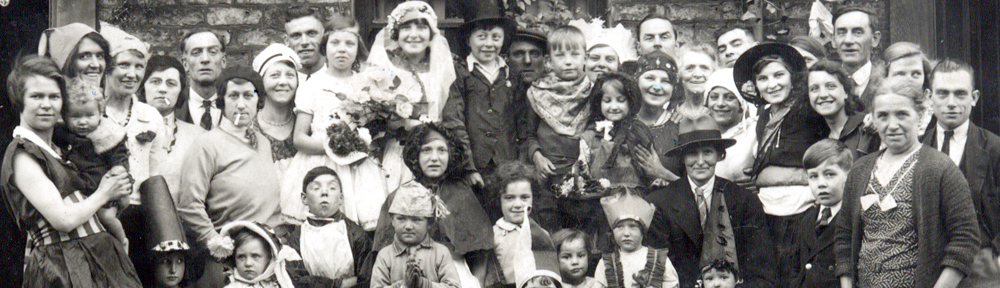
Stockton and Thornaby Hospitals Childrens Ward on Bowesfield Lane. This photograph would have been taken around the 1920s.
A view of Wolviston Mill, 1960s.

Red Box 3’ from the ’70 Years Behind The Lens’ exhibition by local artist Ray Wallace Thompson.

From Green Dragon Yard’ from the ’70 Years Behind The Lens’ exhibition by local artist Ray Wallace Thompson. 
Possibly Newtown school 1940 .The nurses stand in front of a wall of sandbags. The lady on the right is Gladys J. Armstrong. 
The Port of Stockton in the 1960s near to its final days. 
Cartmel Priory’ from the ’70 Years Behind The Lens’ exhibition by local artist Ray Wallace Thompson. 
Going Home’ from the ’70 Years Behind The Lens’ exhibition by local artist Ray Wallace Thompson.

Avocet Feeding’ from the ’70 Years Behind The Lens’ exhibition by Ray Wallace Thompson. 
Mrs K Peters – 1936’ from the ’70 Years Behind The Lens’ exhibition by local artist Ray Wallace Thompson.

Billingham water mill looking North West, showing the water wheel, sluice and tail race.

An old drawing of Kelly’s Ferry fully laden with passengers. Despite the new bridge, men who were employed in the shipyards, which developed on the South Stockton bank of the river in the 1830s, continued to use the ferry, a private enterprise. The men living in Stockton who worked in the shipyards on the Thornaby side, would have had a long walk down to the stone bridge (and later Victoria Bridge) and then back up the side of the river to the shipyards. Working up to a 12 hour day was enough! Kelly’s Ferry crossed the Tees by the Shiplaunch Inn, at the foot of Thistle Green. This provided the workers with much shorter journey to work. The normal load of Kelly’s largest boat was 60 men, but he carried anything up to 112! There were up to 1100 crossings daily, so the shipyards had to stagger their lunch hours. A single fare was 1/2d, and a weekly ticket was 9d. The shipyards declined rapidly in the 1920s, and in 1950 the crossings ceased altogether. Various other ferries crossed the Tees up until the early 20th C, providing cheap and quick crossings for the thousands of workers who worked in the areas industries. The first ferries were rowing boats, but later steam provided extra power for longer journeys up the river. 
A Scottish Highland piper, dancers and musicians playing Northumbrian small pipes at Preston Hall Museum. c1985 


A steamboat crammed full with men. It was usually the case of ‘the more the merrier’! 
Upper Leithen’ from the ’70 Years Behind The Lens’ exhibition by local artist Ray Wallace Thompson.
